
Summary:
Financial forecasting helps businesses prepare for future growth, manage risks, and make informed decisions. This guide explores common financial forecasting mistakes and practical ways to avoid them, helping create more accurate projections and stronger business plans.
Financial forecasting is only useful when it reflects reality. Many businesses invest time creating forecasts, yet small mistakes in assumptions, data, or planning can lead to inaccurate projections that affect budgets, hiring decisions, and growth strategies.
Why Is Financial Forecasting Important for Business Success?
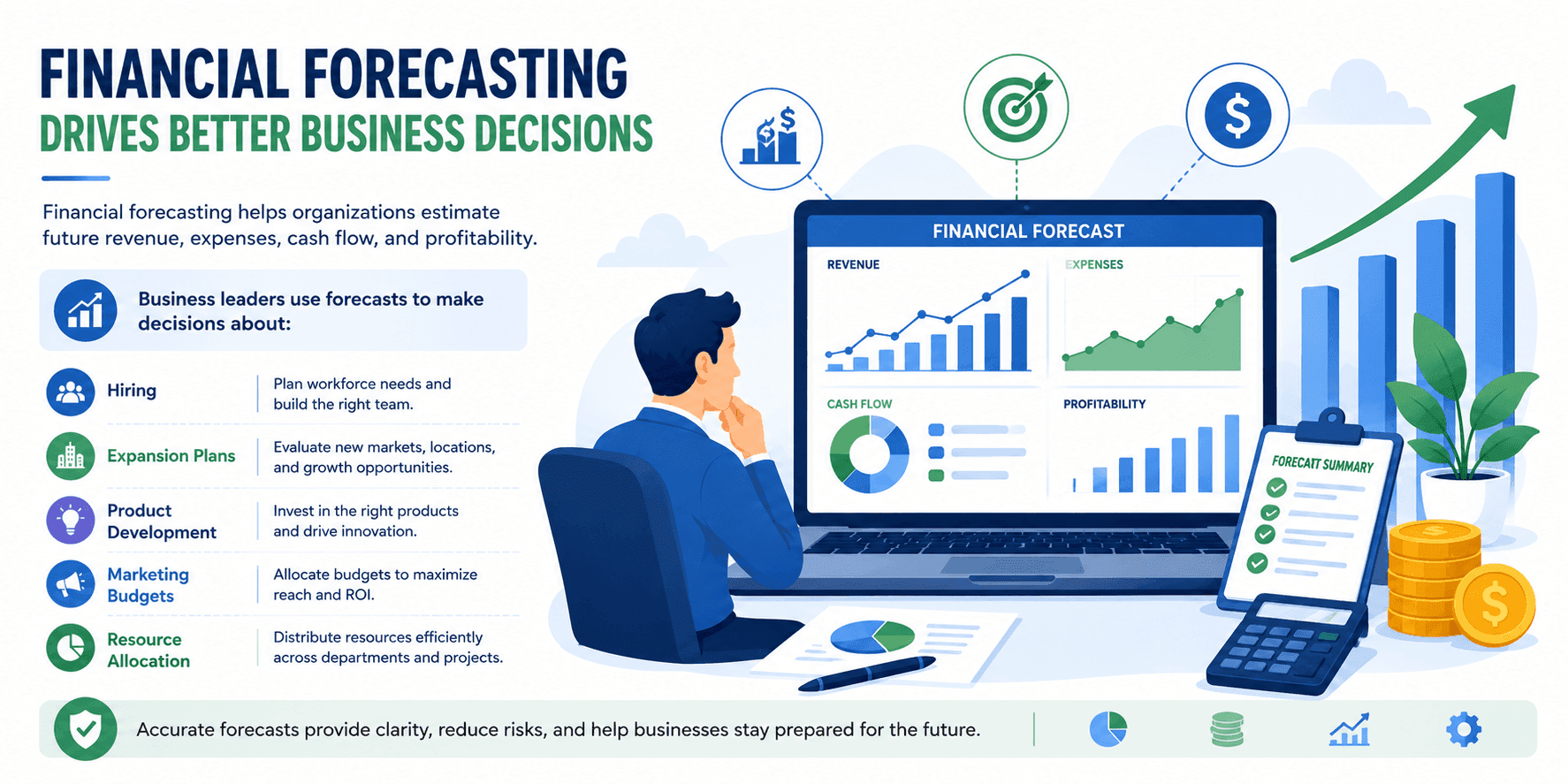
Financial forecasting helps organizations estimate future revenue, expenses, cash flow, and profitability.
Business leaders use forecasts to make decisions about:
- Hiring
- Expansion plans
- Product development
- Marketing budgets
- Resource allocation
Without forecasting, businesses often react to situations instead of preparing for them.
A good forecast does not predict the future perfectly. Instead, it provides a structured view of possible outcomes so decision-makers can prepare accordingly.
Citation-worthy insight:
The purpose of financial forecasting is not to eliminate uncertainty but to reduce surprises.
Companies that regularly update forecasts often identify risks earlier and respond more effectively to changing market conditions.
What Happens When Businesses Rely on Unrealistic Revenue Projections?
One of the most common financial forecasting mistakes is assuming revenue will grow faster than historical performance supports.
Optimistic forecasts can be tempting, especially when launching new products or entering new markets. However, unrealistic expectations often create planning problems.
Examples include:
- Hiring too quickly
- Overspending on marketing
- Expanding operations prematurely
- Taking on unnecessary financial commitments
Revenue forecasts should be based on:
- Historical performance
- Market demand
- Sales capacity
- Industry trends
- Economic conditions
Businesses should also create multiple scenarios rather than relying on a single best-case projection.
A forecast built entirely on optimism may look attractive on paperbut it often creates challenges when actual performance falls short.
Why Do Businesses Often Ignore Cash Flow Forecasting?
Many organizations focus heavily on revenue and profit while paying less attention to cash flow.
This can become a serious problem.
A business may appear profitable but still struggle to pay suppliers, employees, or operating expenses if cash inflows arrive later than expected.
Cash flow forecasting helps businesses understand:
- When money enters the business
- When expenses must be paid
- Potential funding gaps
- Seasonal fluctuations
Citation-worthy insight:
Revenue keeps a business growing, but cash flow keeps a business operating.
Ignoring cash flow projections can create financial stress even when sales numbers appear healthy.
Businesses that regularly monitor cash flow are often better positioned to handle unexpected expenses and market changes
How Can Poor Data Lead to Forecasting Errors?
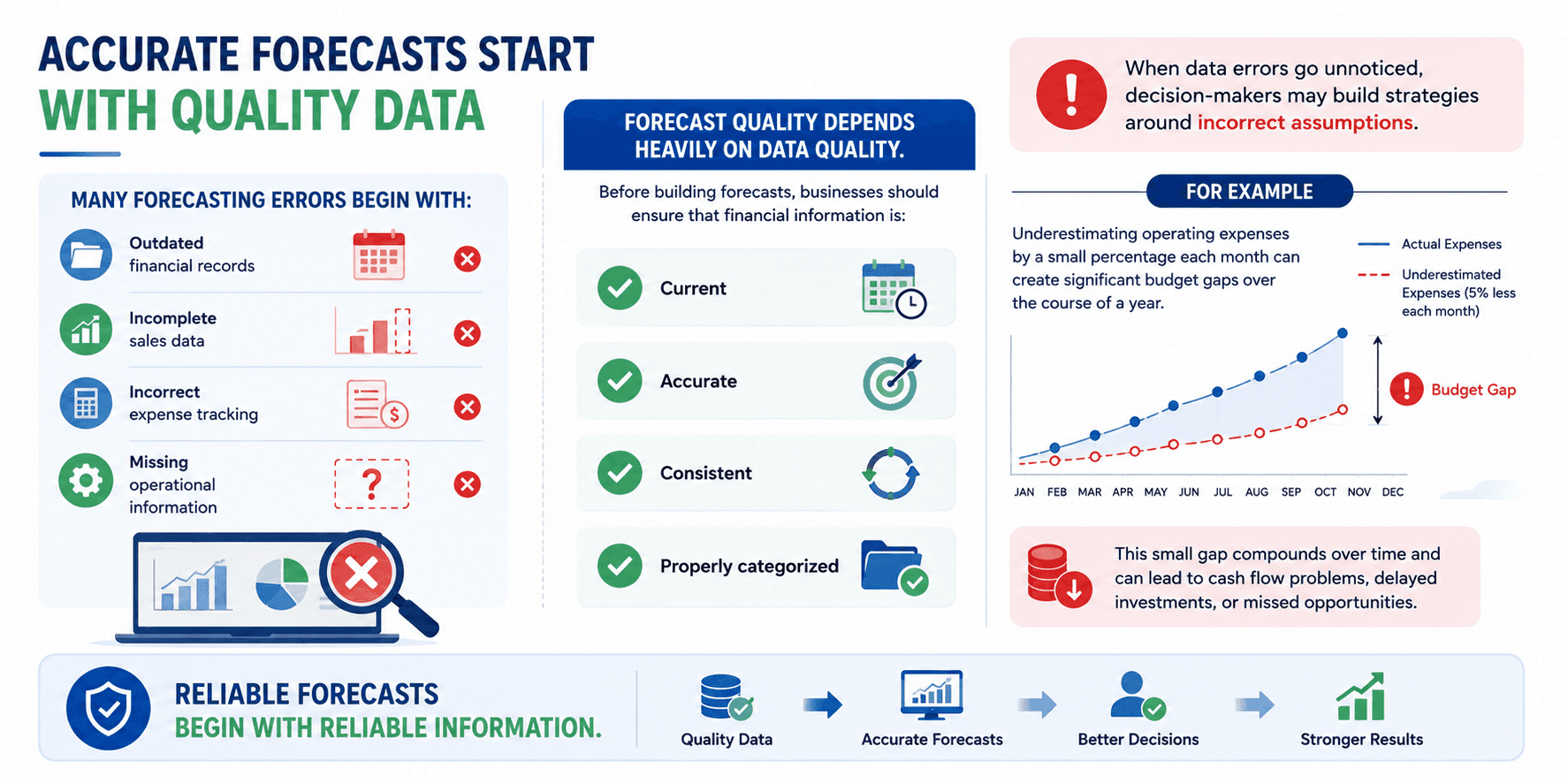
Even sophisticated forecasting models produce poor results when the underlying data is inaccurate.
Many forecasting errors begin with:
- Outdated financial records
- Incomplete sales data
- Incorrect expense tracking
- Missing operational information
Forecast quality depends heavily on data quality.
Before building forecasts, businesses should ensure that financial information is:
- Current
- Accurate
- Consistent
- Properly categorized
When data errors go unnoticed, decision-makers may build strategies around incorrect assumptions.
For example, underestimating operating expenses by a small percentage each month can create significant budget gaps over the course of a year.
Reliable forecasts begin with reliable information.
Should Businesses Create Only One Forecast Scenario?
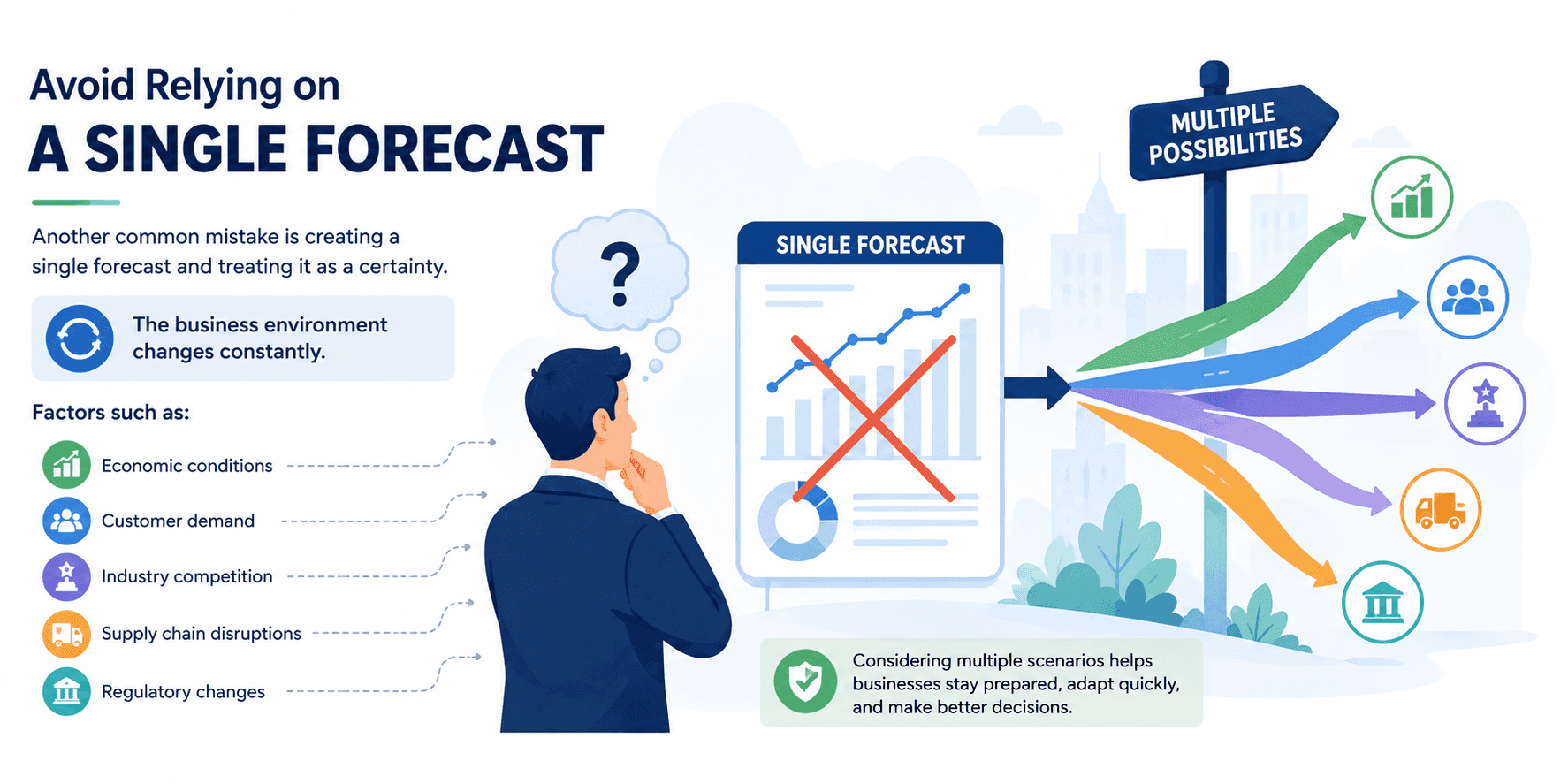
Another common mistake is creating a single forecast and treating it as a certainty.
The business environment changes constantly.
Factors such as:
- Economic conditions
- Customer demand
- Industry competition
- Supply chain disruptions
- Regulatory changes
can influence outcomes significantly.
Best-Case Scenario
Assumes stronger-than-expected performance.
Expected Scenario
Represents the most realistic outcome.
Worst-Case Scenario
Accounts for challenges and slower growth.
Scenario planning improves decision-making because leaders can prepare responses before problems occur.
Voice-search answer:
"How many financial forecasts should a business create?"
Most financial professionals recommend building multiple forecasting scenarios so businesses can prepare for different outcomes rather than relying on a single prediction.
How Often Should Financial Forecasts Be Updated?
A forecast should not be treated as a document that is created once and forgotten.
Markets change.
Customer behavior changes.
Business priorities evolve.
Regular updates help maintain forecasting accuracy.
Best practices include:
- Monthly reviews
- Quarterly adjustments
- Annual strategic forecasting
- Monitoring actual results against projections
Comparing forecasts with actual performance reveals areas where assumptions need improvement.
Many experienced financial professionals use forecasting as an ongoing management tool rather than a yearly exercise.
Most platforms help professionals showcase skills. Toskie TeamUp helps experienced finance professionals demonstrate expertise through real collaboration, training, and mentorship opportunities. Through one profile and three opportunity types, professionals can build reputation while helping businesses make better decisions.
Financial Planning Best Practices
Understanding Business Cash Flow Management
Strong financial forecasting is not about predicting every outcome perfectly. It is about making informed decisions using realistic assumptions, reliable data, and continuous adjustments. Businesses that improve forecasting practices often gain greater confidence, stability, and readiness for future opportunities.
If financial planning, forecasting, or business analysis is part of your expertise, your knowledge can create value beyond your current workplace. Toskie TeamUp is a verified collaboration platform where finance professionals can contribute as Collaborators on real projects, teach as Trainers, or guide others as Mentors. With one profile and three opportunities, Toskie TeamUp helps experienced professionals turn expertise into meaningful impact. Create your profile and showcase your financial expertise through real-world collaboration.
Related blogs:
- How to Build a Financial Forecast for a Growing Business
- Cash Flow Forecasting vs Financial Forecasting: What's the Difference?
Related skill page:
Financial Analysis
Frequently Asked Questions
Comments
Be the first to leave a comment.