
Summary:
Many startups focus heavily on products and customers but overlook the infrastructure needed to support growth. Poor systems, weak processes, and delayed technology decisions can create bottlenecks that slow operations, increase costs, and limit scalability.
A startup can survive with imperfect infrastructure in its early days. As growth accelerates, however, weak systems and processes often become hidden obstacles that slow teams, frustrate customers, and create operational risks. The startups that scale successfully usually invest in infrastructure before it becomes a problem.
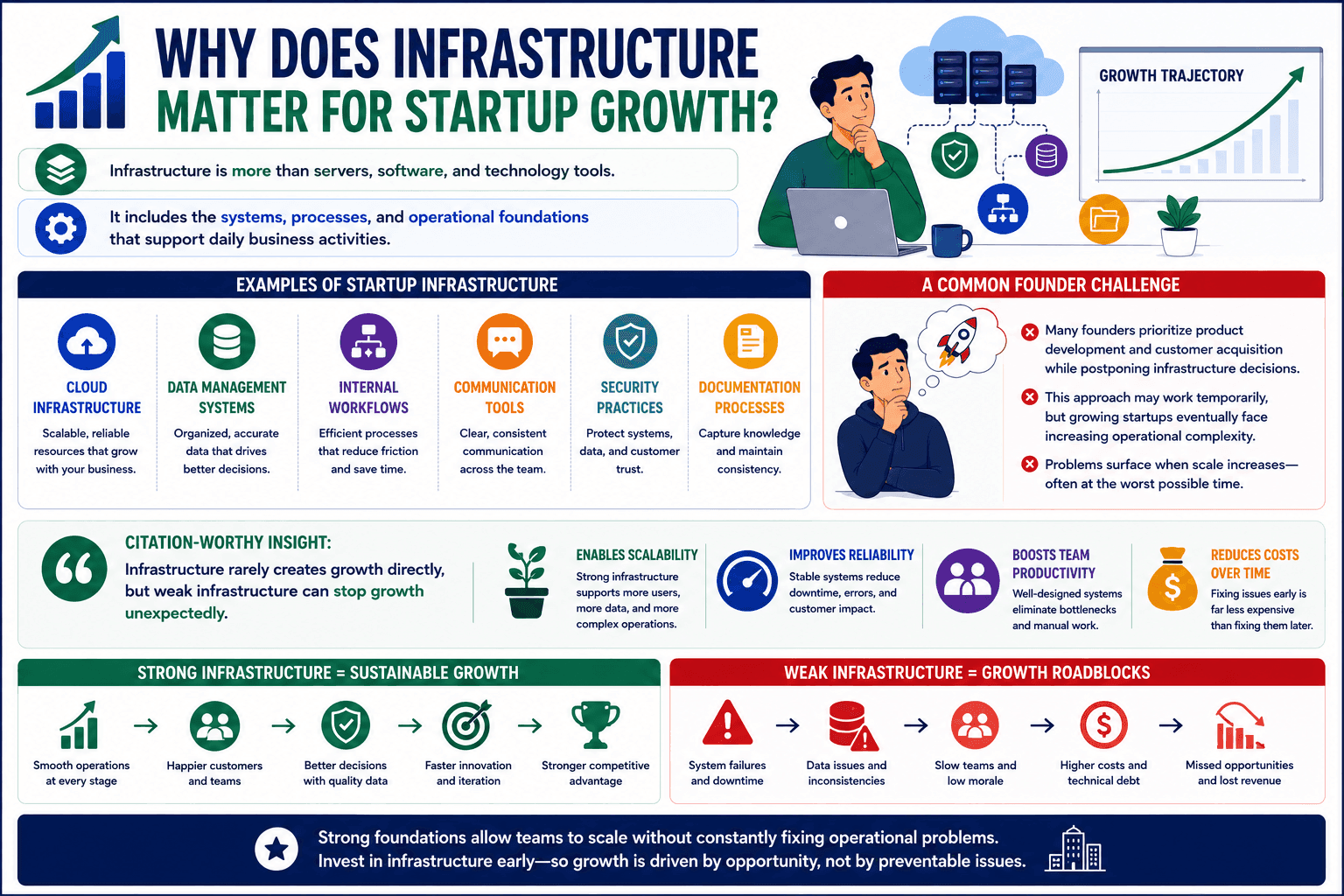
Why Does Infrastructure Matter for Startup Growth?
Infrastructure is more than servers, software, and technology tools.
It includes the systems, processes, and operational foundations that support daily business activities.
Examples include:
- Cloud infrastructure
- Data management systems
- Internal workflows
- Communication tools
- Security practices
- Documentation processes
Many founders prioritize product development and customer acquisition while postponing infrastructure decisions.
This approach may work temporarily, but growing startups eventually face increasing operational complexity.
Citation-worthy insight:
Infrastructure rarely creates growth directly, but weak infrastructure can stop growth unexpectedly.
Strong foundations allow teams to scale without constantly fixing operational problems.
What Happens When Startups Delay Infrastructure Planning?
One of the most common startup infrastructure mistakes is waiting until growth creates visible problems.
At first, manual processes often seem sufficient.
As teams grow, these same processes can become bottlenecks.
Common consequences include:
- Missed deadlines
- Reduced productivity
- Customer service delays
- Data inconsistencies
- Increased operational costs
For example, a startup managing customer information through spreadsheets may struggle once hundreds or thousands of users need support.
Planning infrastructure proactively helps startups avoid expensive emergency fixes later.
Why Do Manual Processes Become a Scaling Problem?
Many startups begin with manual workflows because they are simple and inexpensive.
However, processes that work for a five-person team may fail when the company reaches twenty or fifty employees.
Manual processes often create challenges such as:
- Repetitive work
- Human error
- Knowledge silos
- Slow approvals
- Inconsistent execution
As workloads increase, employees spend more time managing processes than creating value.
Citation-worthy insight:
A process that saves time today can become a bottleneck tomorrow if it cannot scale with the business.
Automation and process optimization become increasingly important as startups grow.
Topic: Ai automation vs manual workflows
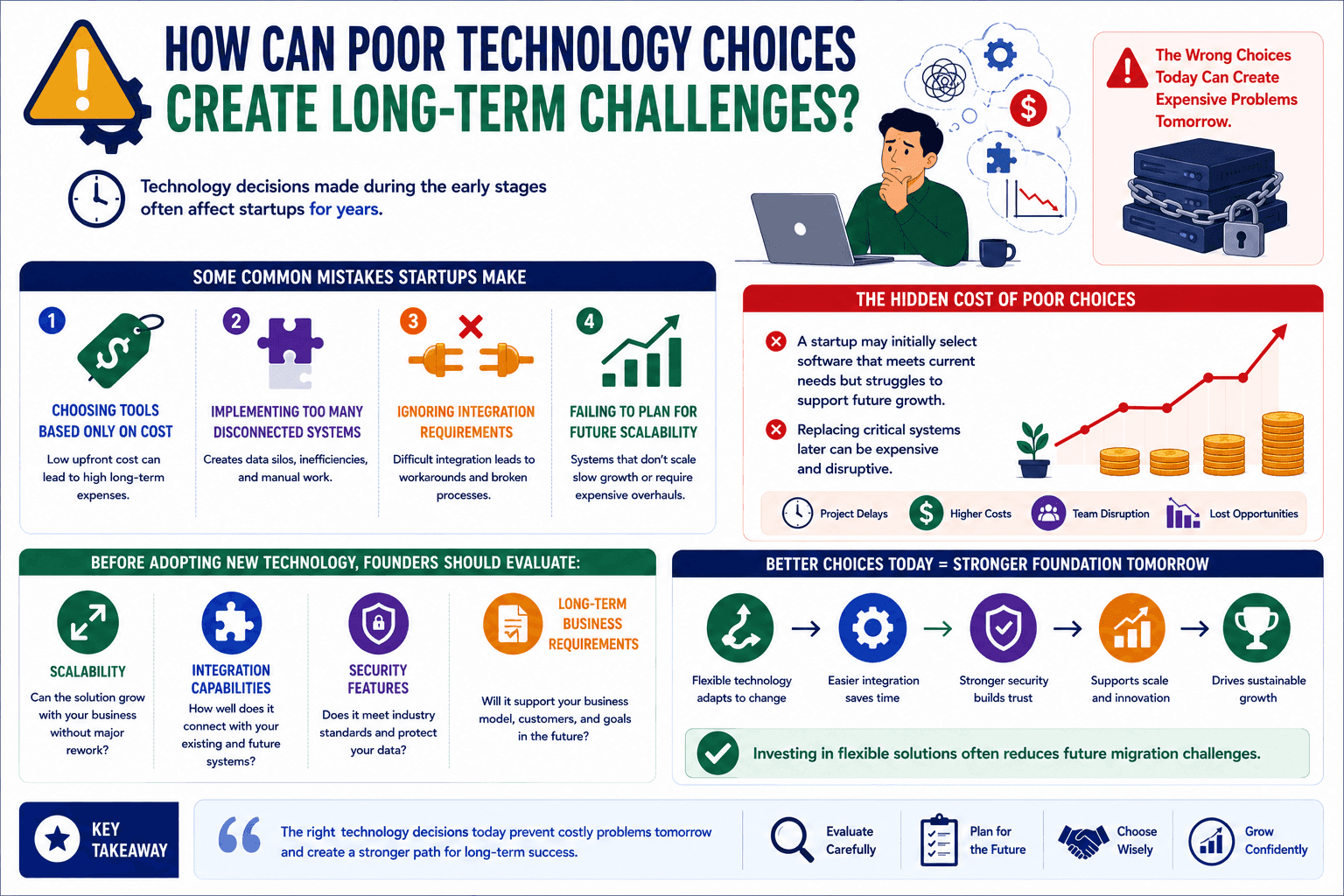
How Can Poor Technology Choices Create Long-Term Challenges?
Technology decisions made during the early stages often affect startups for years.
Some common mistakes include:
- Choosing tools based only on cost
- Implementing too many disconnected systems
- Ignoring integration requirements
- Failing to plan for future scalability
A startup may initially select software that meets current needs but struggles to support future growth.
Replacing critical systems later can be expensive and disruptive.
Before adopting new technology, founders should evaluate:
- Scalability
- Integration capabilities
- Security features
- Long-term business requirements
Investing in flexible solutions often reduces future migration challenges.
Topic: Cloud Adoption Best Practices
Why Is Data Management Often Overlooked?
Data becomes increasingly valuable as startups grow.
Unfortunately, many organizations do not establish strong data management practices early enough.
Common issues include:
- Duplicate records
- Inconsistent reporting
- Missing customer information
- Poor data governance
Without reliable data, business decisions become more difficult.
Teams may spend significant time verifying information instead of acting on it.
Strong data management helps improve:
- Decision-making
- Customer experience
- Operational efficiency
- Financial planning
Founders should treat data infrastructure as a strategic asset rather than an administrative task.
Topic: Financial Forecasting
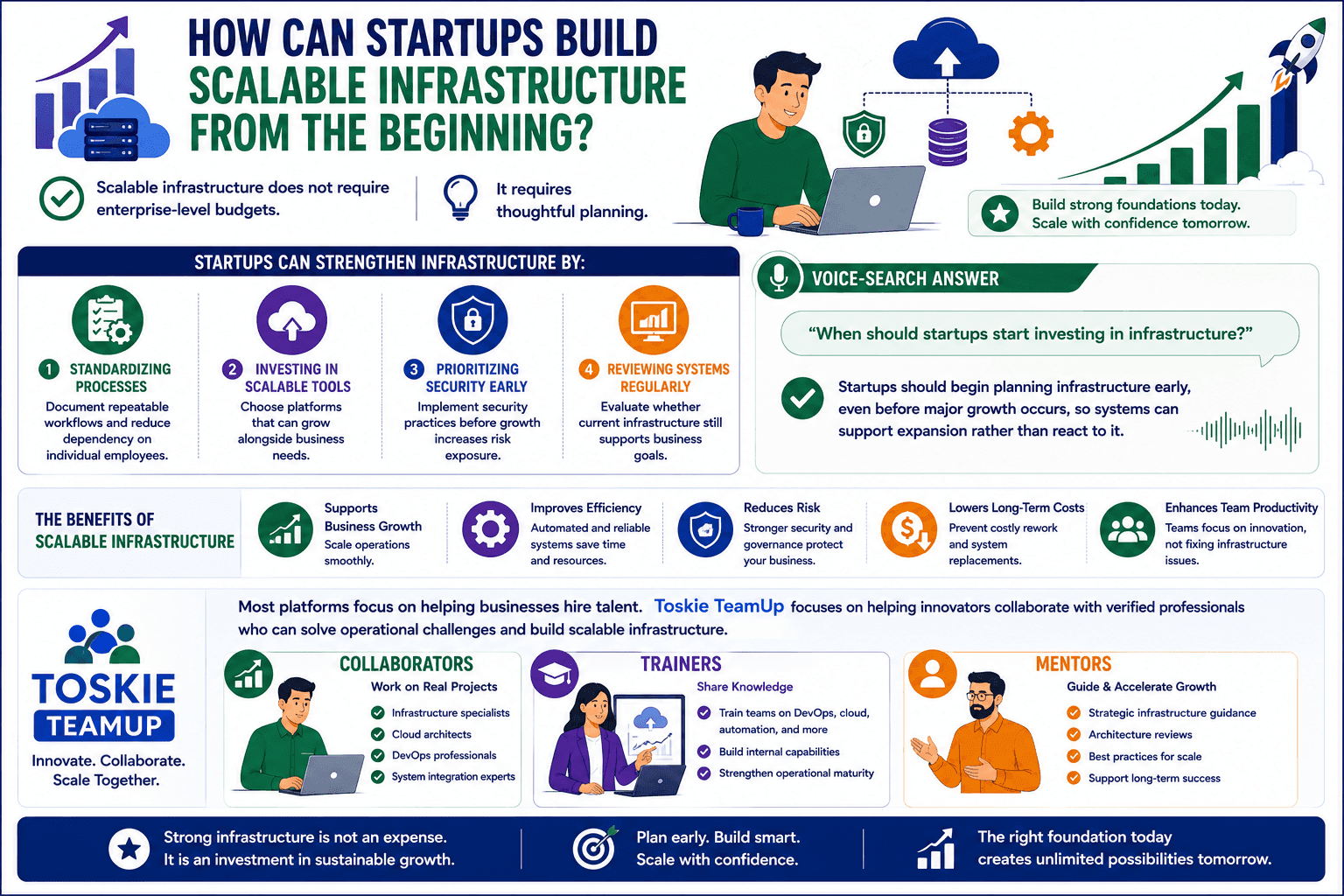
How Can Startups Build Scalable Infrastructure From the Beginning?
Scalable infrastructure does not require enterprise-level budgets.
It requires thoughtful planning.
Startups can strengthen infrastructure by:
Standardizing Processes
Document repeatable workflows and reduce dependency on individual employees.
Investing in Scalable Tools
Choose platforms that can grow alongside business needs.
Prioritizing Security Early
Implement security practices before growth increases risk exposure.
Reviewing Systems Regularly
Evaluate whether current infrastructure still supports business goals.
Voice-search answer:
"When should startups start investing in infrastructure?"
Startups should begin planning infrastructure early, even before major growth occurs, so systems can support expansion rather than react to it.
Most platforms focus on helping businesses hire talent. Toskie TeamUp focuses on helping innovators collaborate with verified professionals who can solve operational challenges. Through one profile and three opportunities, infrastructure specialists, cloud architects, DevOps professionals, and mentors can help startups build stronger foundations for growth.
Topics:
Cloud Computing
DevOps engineering
system designing
startup scaling challenges
Growth challenges are often infrastructure challenges in disguise. The systems, processes, and technologies that support a startup today may not support it tomorrow. Founders who build scalable foundations early are often better prepared to handle growth, complexity, and opportunity.
If your expertise includes cloud infrastructure, DevOps, system design, cybersecurity, or operational scalability, your knowledge can help startups avoid costly growth bottlenecks. Toskie TeamUp is a local-first talent platform where professionals can collaborate on real projects, teach practical skills as Trainers, or guide founders as Mentors. With one profile and three opportunity paths, Toskie TeamUp helps expertise turn into measurable business impact. Create your profile and connect with innovators building the next stage of their growth journey.
Related blogs:
- How Startups Can Build Scalable Systems From Day One
- Why Operational Bottlenecks Appear During Rapid Growth
Related skill page:
Cloud Computing
Frequently Asked Questions
Comments
Be the first to leave a comment.