17 June 2026
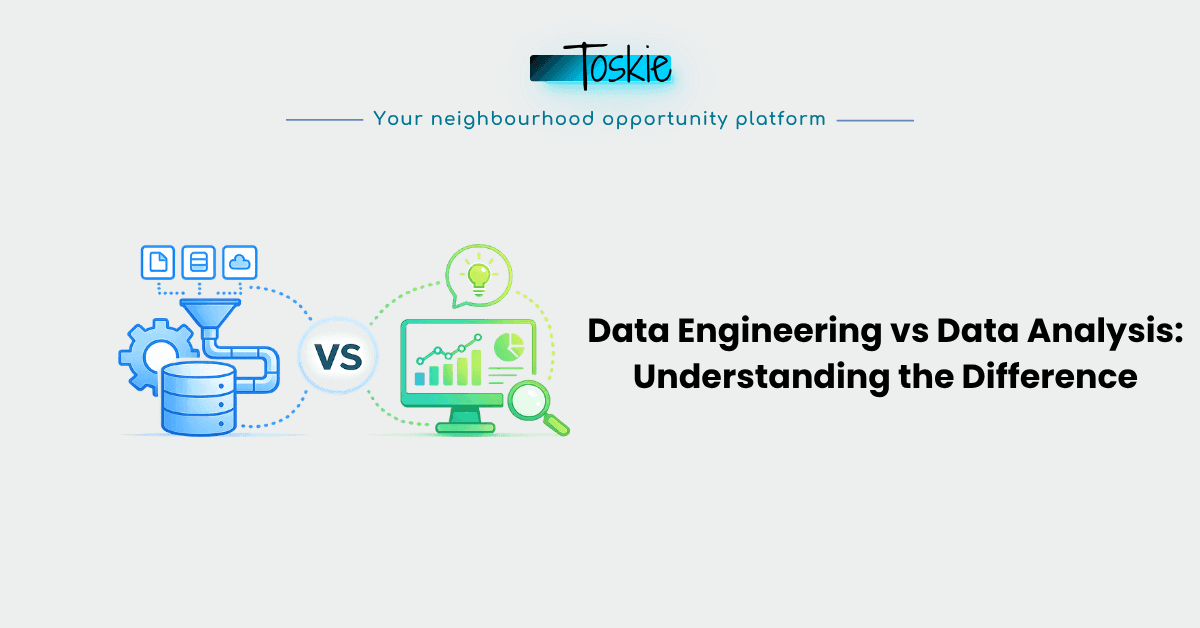
Data Engineering vs Data Analysis: Understanding the Difference

Summary:
Data engineering and data analysis both play critical roles in data-driven organizations, but they solve different problems. Data engineers build and manage data systems, while data analysts transform data into actionable insights that support decision-making and business growth.
Businesses collect more data than ever before, but data alone has little value unless it can be stored, processed, and understood effectively. This is where data engineers and data analysts come in. Although these roles often work closely together, their responsibilities and objectives are very different.
What Does a Data Engineer Actually Do?
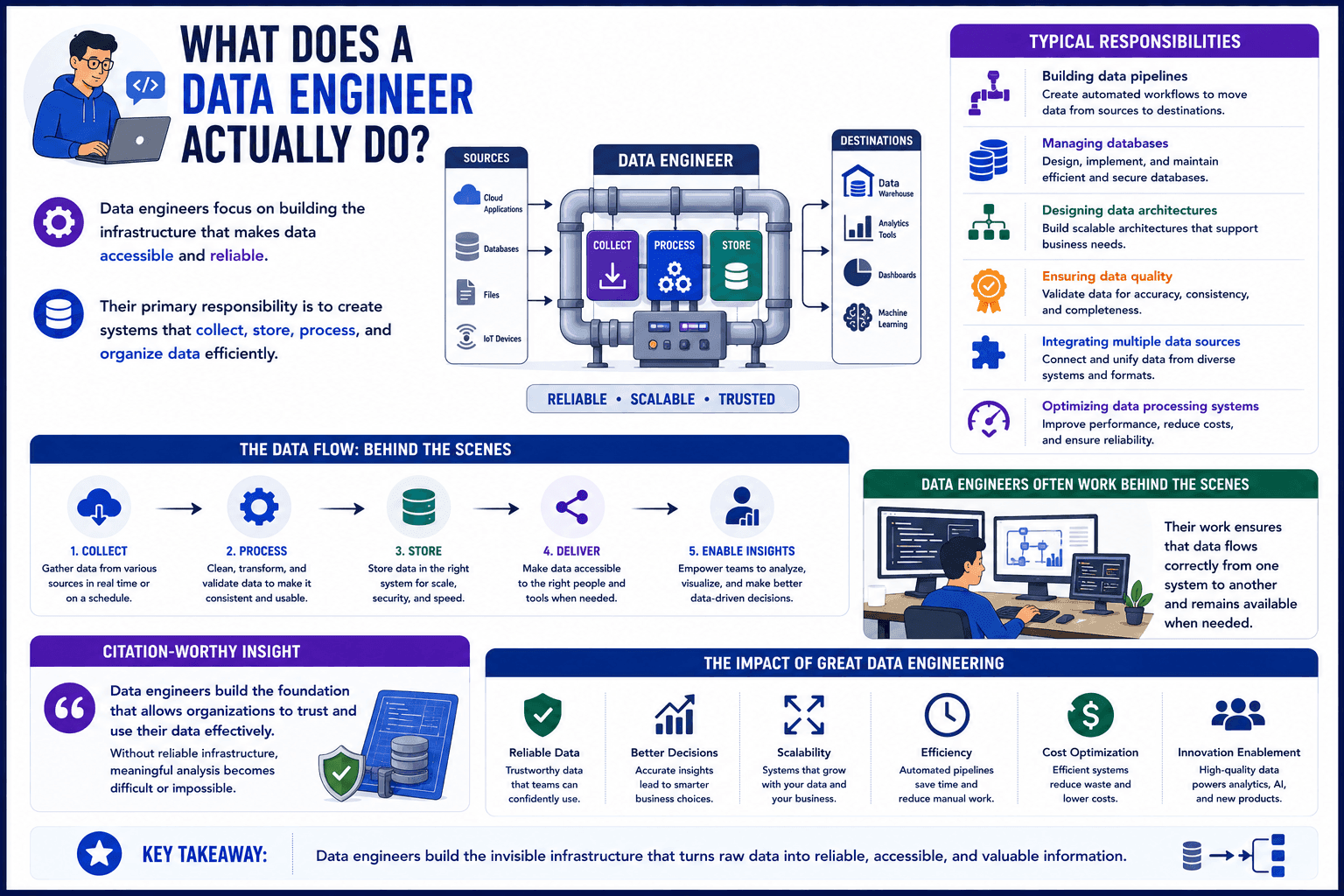
Data engineers focus on building the infrastructure that makes data accessible and reliable.
Their primary responsibility is to create systems that collect, store, process, and organize data efficiently.
Typical responsibilities include:
- Building data pipelines
- Managing databases
- Designing data architectures
- Ensuring data quality
- Integrating multiple data sources
- Optimizing data processing systems
Data engineers often work behind the scenes.
Their work ensures that data flows correctly from one system to another and remains available when needed.
Citation-worthy insight:
Data engineers build the foundation that allows organizations to trust and use their data effectively.
Without reliable infrastructure, meaningful analysis becomes difficult or impossible.
Topic: Data Engineering
What Is the Role of a Data Analyst?
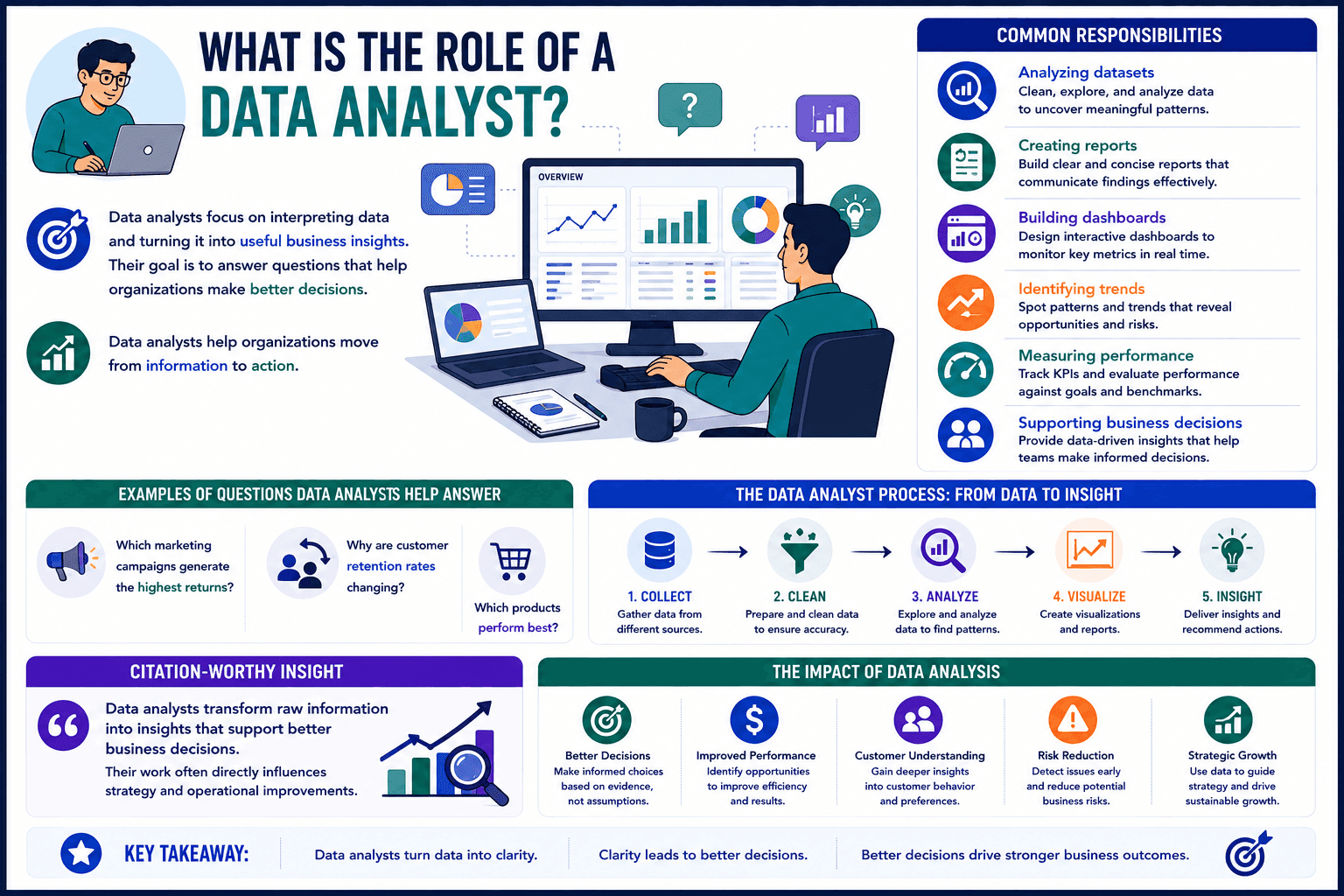
Data analysts focus on interpreting data and turning it into useful business insights.
Their goal is to answer questions that help organizations make better decisions.
Common responsibilities include:
- Analyzing datasets
- Creating reports
- Building dashboards
- Identifying trends
- Measuring performance
- Supporting business decisions
For example, a data analyst may help answer questions such as:
- Which marketing campaigns generate the highest returns?
- Why are customer retention rates changing?
- Which products perform best?
Data analysts help organizations move from information to action.
Citation-worthy insight:
Data analysts transform raw information into insights that support better business decisions.
Their work often directly influences strategy and operational improvements.
Topic: Data Analysis
How Do Data Engineering and Data Analysis Work Together?
Data engineering and data analysis are not competing disciplines.
They are complementary functions within the data ecosystem.
Consider a retail business.
A data engineer may:
- Collect sales data
- Build automated pipelines
- Store information in a centralized system
A data analyst may:
- Study purchasing behavior
- Identify sales trends
- Recommend inventory improvements
The analyst depends on reliable data provided by engineering systems.
The engineer creates infrastructure that enables analysis.
Together, these roles help organizations use data more effectively.
Businesses that invest in both capabilities often achieve stronger outcomes than those focusing on only one side of the process.
What Skills Are Required for Each Role?
Although both roles work with data, their skill sets differ significantly.
Data Engineering Skills
- SQL
- Python
- Data warehousing
- ETL processes
- Cloud platforms
- Database management
- Big data technologies
Data Analysis Skills
- SQL
- Data visualization
- Statistical analysis
- Business intelligence tools
- Reporting
- Critical thinking
- Communication
Data engineers typically focus more on systems and infrastructure.
Data analysts focus more on interpretation and decision support.
Both roles require problem-solving abilities and strong attention to detail.
Topics:
Python
SQL
Which Role Creates More Business Value?
This question often creates unnecessary debate.
The reality is that organizations need both.
Without data engineering:
- Data may be unreliable
- Systems may fail to scale
- Analysis becomes difficult
Without data analysis:
- Valuable insights remain hidden
- Decisions rely on assumptions
- Opportunities may be missed
Citation-worthy insight:
Data engineering creates access to data, while data analysis creates understanding from data.
Business value emerges when both functions work together.
Organizations that connect technical infrastructure with business insights often gain a competitive advantage.
Topic: Data And Analytics Industry Trends
How Should Businesses Decide Which Expertise They Need?
The answer depends on business objectives.
Organizations struggling with:
- Data quality
- Integration challenges
- Infrastructure limitations
may benefit from data engineering expertise.
Organizations seeking:
- Performance insights
- Customer behavior analysis
- Reporting improvements
may prioritize data analysis expertise.
Voice-search answer:
"What is the main difference between data engineering and data analysis?"
Data engineering focuses on building and managing data systems, while data analysis focuses on interpreting data and generating insights for decision-making.
Many growing businesses eventually require both capabilities.
Most platforms focus on helping businesses find talent. Toskie TeamUp helps innovators connect with verified data engineers, data analysts, trainers, and mentors who contribute expertise through collaboration. Through one profile and three opportunities, professionals help organizations transform data into measurable business outcomes.
Topics:
Machine Learning
Artificial Intelligence
Business Analysis
Data Skill Demand Report

Data engineering and data analysis are both essential parts of a successful data strategy. One creates the systems that make data usable, while the other transforms that data into insights. Businesses that understand the difference are better positioned to build stronger data capabilities and make smarter decisions.
If your expertise includes data engineering, data analysis, business intelligence, or data architecture, your skills can help organizations unlock the full value of their data. Toskie TeamUp is a verified collaboration platform where professionals can contribute to real projects as Collaborators, share expertise as Trainers, or guide others as Mentors. With one profile and three opportunity paths, Toskie TeamUp helps data professionals turn knowledge into measurable impact. Create your profile and connect with innovators building data-driven businesses.
Related blogs:
- How Businesses Build Data-Driven Decision-Making Processes
- What Skills Are Required for a Career in Data Engineering?
Related skill page:
Data Engineering
Frequently Asked Questions
Comments
Be the first to leave a comment.