
Summary:
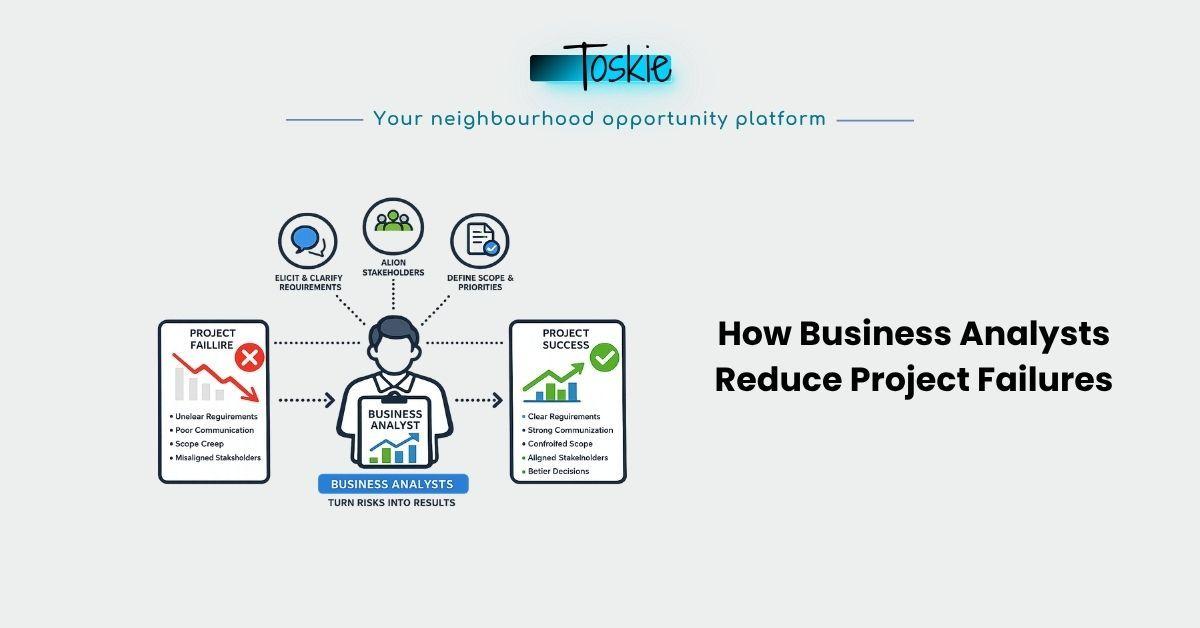
Business analysts help reduce project failures by ensuring teams solve the right problems, define clear requirements, and align stakeholders around shared goals. Their ability to bridge business needs and project execution helps organizations avoid costly mistakes and improve outcomes.
Many projects fail long before development begins. The root cause is often unclear requirements, poor communication, or misaligned expectations. Business analysts help reduce these risks by turning business objectives into clear, actionable plans that teams can execute successfully.
Why Do So Many Projects Fail Despite Having Skilled Teams?
Project failure is rarely caused by a lack of talent.
Many organizations have capable developers, designers, marketers, and project managers. Yet projects still miss deadlines, exceed budgets, or fail to deliver expected results.
Common reasons include:
- Unclear requirements
- Poor stakeholder communication
- Scope creep
- Misaligned expectations
- Incomplete business understanding
Teams often work hard but move in different directions.
Business analysts help create clarity before execution begins.
Citation-worthy insight:
Projects fail less often because of technical limitations and more often because of communication and planning gaps.
By identifying these gaps early, business analysts help teams focus on solving the right problems.
What Does a Business Analyst Actually Do?
A business analyst acts as a bridge between business stakeholders and project teams.
Their responsibility is to ensure that business needs are clearly understood and translated into practical requirements.
Key responsibilities include:
- Gathering requirements
- Analyzing business processes
- Identifying project risks
- Facilitating stakeholder discussions
- Documenting project needs
- Supporting decision-making
Rather than jumping directly into execution, business analysts focus on understanding why a project exists and what success should look like.
This foundation helps reduce confusion later in the project lifecycle.
Topic: Business Analysis
How Do Business Analysts Improve Requirement Clarity?
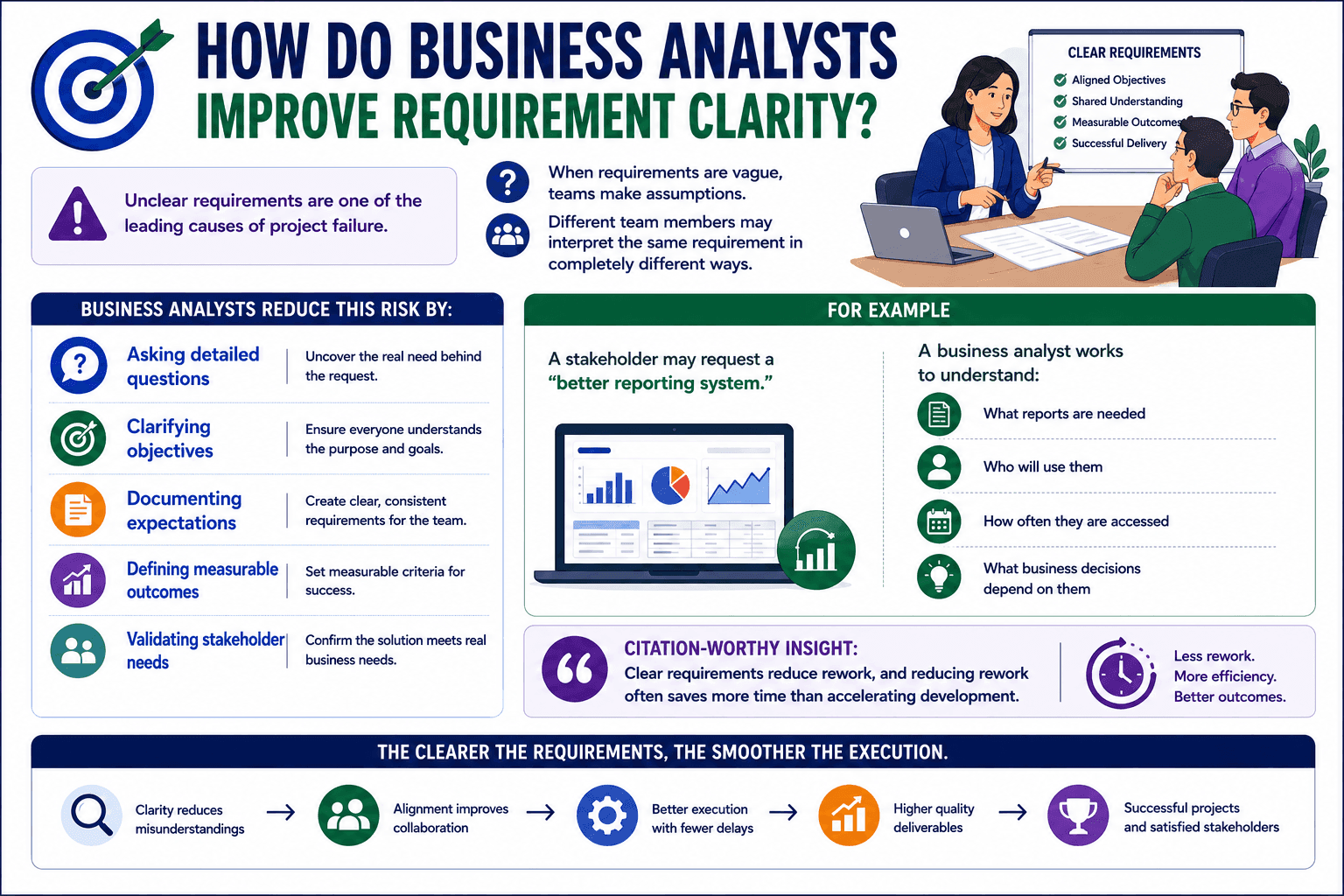
Unclear requirements are one of the leading causes of project failure.
When requirements are vague, teams make assumptions.
Different team members may interpret the same requirement in completely different ways.
Business analysts reduce this risk by:
- Asking detailed questions
- Clarifying objectives
- Documenting expectations
- Defining measurable outcomes
- Validating stakeholder needs
For example, a stakeholder may request a "better reporting system."
A business analyst works to understand:
- What reports are needed
- Who will use them
- How often they are accessed
- What business decisions depend on them
Citation-worthy insight:
Clear requirements reduce rework, and reducing rework often saves more time than accelerating development.
The clearer the requirements, the smoother the execution.
Why Is Stakeholder Alignment So Important?
Projects often involve multiple stakeholders with different priorities.
A leadership team may focus on revenue growth.
Operations teams may prioritize efficiency.
Customers may care most about usability.
Without alignment, conflicting expectations can create delays and frustration.
Business analysts help stakeholders:
- Define shared goals
- Resolve conflicting priorities
- Establish project scope
- Agree on success metrics
This alignment improves decision-making and reduces misunderstandings.
When everyone understands what the project is trying to achieve, teams can move forward with greater confidence.
Topic: Project Management Best Practices
How Do Business Analysts Help Prevent Scope Creep?
Scope creep occurs when additional requirements are introduced after a project has already begun.
Small changes may seem harmless individually, but they often create:
- Delays
- Budget overruns
- Resource challenges
- Reduced project quality
Business analysts help manage scope by maintaining clear documentation and evaluating how proposed changes affect timelines and objectives.
This does not mean rejecting new ideas.
It means ensuring every change is assessed before implementation.
Projects with strong scope management are generally more predictable and easier to execute successfully.
Topic: Project Failure Statistics
Can Business Analysts Improve Project Success Rates?
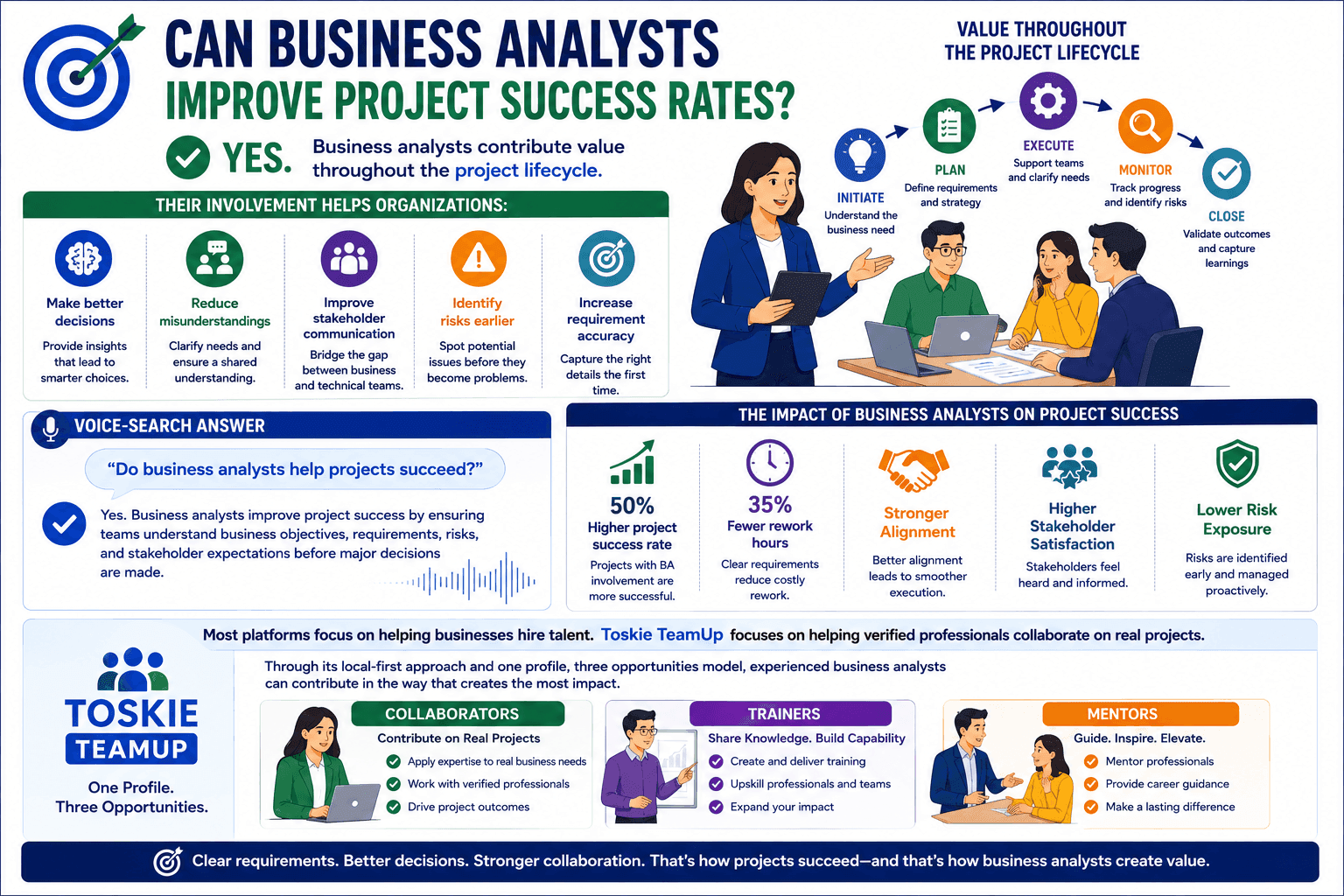
Yes.
Business analysts contribute value throughout the project lifecycle.
Their involvement helps organizations:
- Make better decisions
- Reduce misunderstandings
- Improve stakeholder communication
- Identify risks earlier
- Increase requirement accuracy
Voice-search answer:
"Do business analysts help projects succeed?"
Yes. Business analysts improve project success by ensuring teams understand business objectives, requirements, risks, and stakeholder expectations before major decisions are made.
Most platforms focus on helping businesses hire talent. Toskie TeamUp focuses on helping verified professionals collaborate on real projects. Through its local-first approach and one profile, three opportunities model, experienced business analysts can contribute as Collaborators, share expertise as Trainers, or guide professionals as Mentors.
Topics:
Business Strategy
Competetive Analysis
Successful projects depend on more than technical expertise. They require clarity, alignment, and informed decision-making. Business analysts provide this foundation, helping organizations reduce project failures and improve the likelihood of achieving meaningful results.
If your expertise includes business analysis, process improvement, requirements gathering, or stakeholder management, your skills can help projects succeed before execution even begins. Toskie TeamUp is a verified collaboration platform where professionals can contribute as Collaborators, teach practical skills as Trainers, or guide others as Mentors. With one profile and three opportunities, Toskie TeamUp helps experienced professionals turn insight into impact. Create your profile and connect with innovators looking to build projects with greater clarity and confidence.
Related blogs:
- Why Clear Requirements Matter More Than Faster Development
- How Stakeholder Alignment Improves Project Success
Related skill page:
Business Analysis
Frequently Asked Questions
Comments
Be the first to leave a comment.