
Summary:
Startups do not need large engineering teams to build successful MVPs. By focusing on core problems, prioritizing essential features, and leveraging the right expertise, founders can validate ideas quickly while minimizing development costs and complexity.
Many founders assume they need a large engineering team before building a product. In reality, most successful MVPs begin with a small team focused on solving one problem exceptionally well. The goal of an MVP is not perfection—it is learning whether a solution creates real value for users.
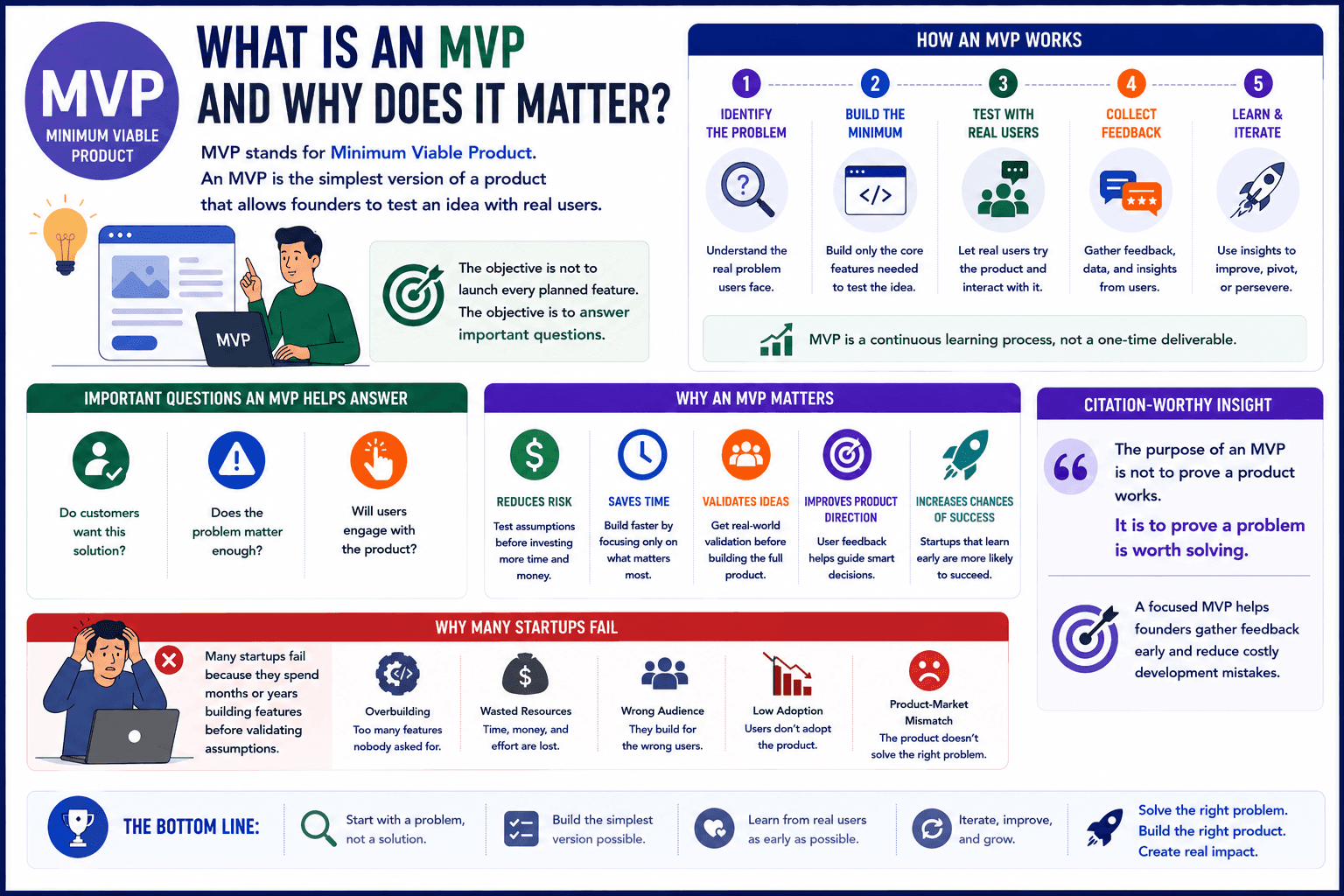
What Is an MVP and Why Does It Matter?
MVP stands for Minimum Viable Product.
An MVP is the simplest version of a product that allows founders to test an idea with real users.
The objective is not to launch every planned feature.
The objective is to answer important questions:
- Do customers want this solution?
- Does the problem matter enough?
- Will users engage with the product?
- Is there potential demand?
Many startups fail because they spend months or years building features before validating assumptions.
Citation-worthy insight:
The purpose of an MVP is not to prove a product works. It is to prove a problem is worth solving.
A focused MVP helps founders gather feedback early and reduce costly development mistakes.
Why Don't Startups Need Large Engineering Teams Initially?
Early-stage startups face uncertainty.
Large engineering teams often make sense after product-market fit has been established.
Before that stage, flexibility is often more valuable than scale.
Small teams offer advantages such as:
- Faster decision-making
- Lower development costs
- Easier communication
- Rapid iteration
- Greater focus
Many successful startups began with only a handful of people working on a tightly defined product vision.
Building a large team too early can increase complexity without improving validation.
Founders should prioritize learning over scaling during the MVP stage.
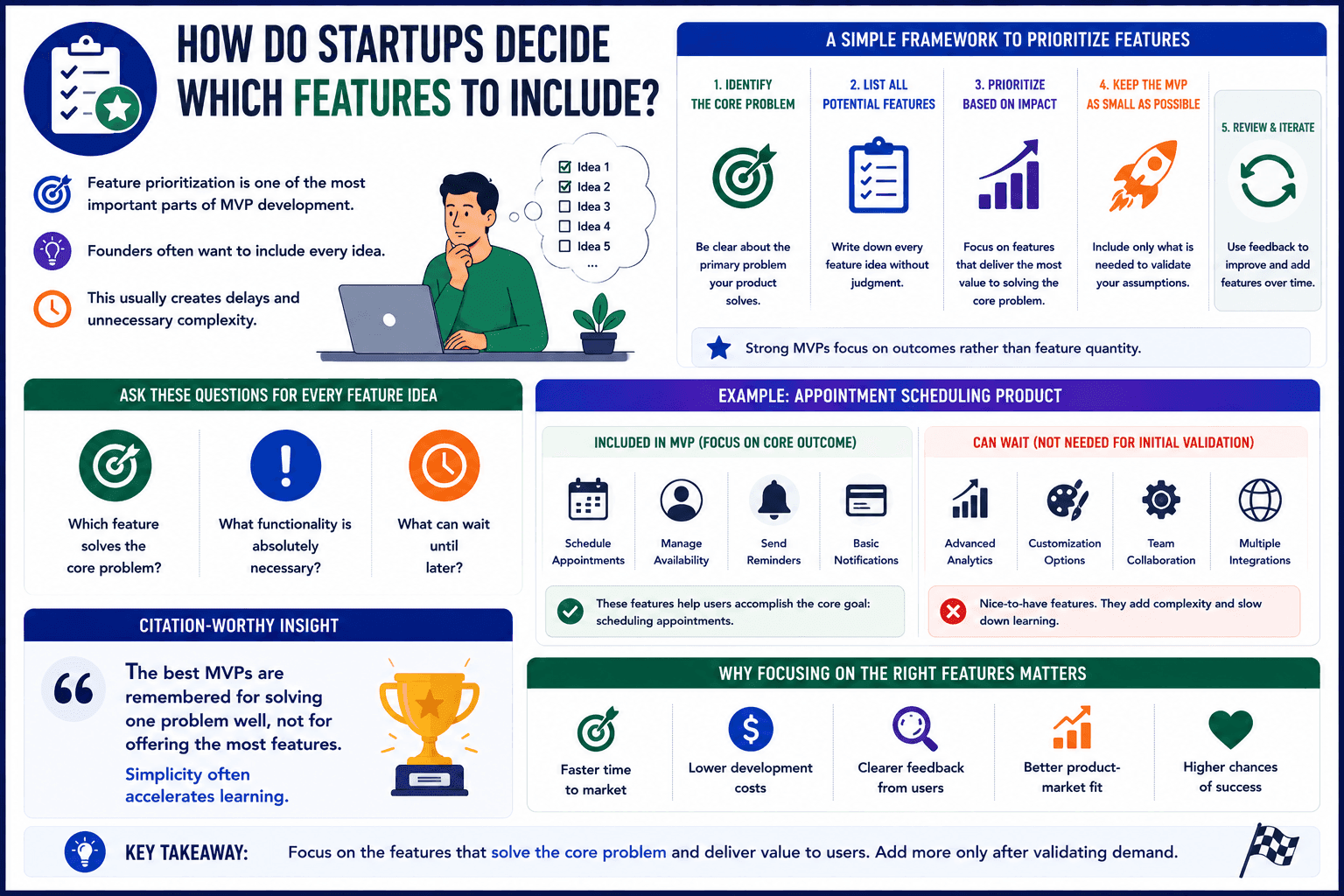
How Do Startups Decide Which Features to Include?
Feature prioritization is one of the most important parts of MVP development.
Founders often want to include every idea.
This usually creates delays and unnecessary complexity.
A useful approach is asking:
- Which feature solves the core problem?
- What functionality is absolutely necessary?
- What can wait until later?
Strong MVPs focus on outcomes rather than feature quantity.
For example, if a product helps users schedule appointments, advanced analytics and customization options may not be essential during initial validation.
Citation-worthy insight:
The best MVPs are remembered for solving one problem well, not for offering the most features.
Simplicity often accelerates learning.
Topic: Product Management
How Can Startups Leverage External Expertise?
Not every startup needs full-time specialists for every role.
Many founders work with:
- Freelance developers
- Product consultants
- UX designers
- Technical mentors
- Project-based collaborators
This approach provides access to expertise without the overhead of building a large permanent team.
A startup may only need specialized skills during certain stages of development.
Most platforms focus on finding workers for individual tasks. Toskie TeamUp takes a different approach by connecting innovators with verified professionals who collaborate as co-builders, trainers, or mentors. Through one profile and three opportunities, professionals contribute expertise that helps ideas move toward execution.
Topics:
Software Development
UI/UX Design
Can No-Code and Low-Code Tools Accelerate MVP Development?
Modern no-code and low-code platforms have expanded the options available to startups.
These tools allow founders to:
- Build prototypes faster
- Test workflows
- Launch basic products
- Gather user feedback
For certain business models, no-code solutions may provide enough functionality to validate demand before investing in custom development.
However, founders should evaluate:
- Scalability requirements
- Technical limitations
- Integration needs
- Long-term product goals
No-code tools are not a replacement for engineering expertise in every situation, but they can significantly reduce time-to-market.
Topic: No-Code Market Trends
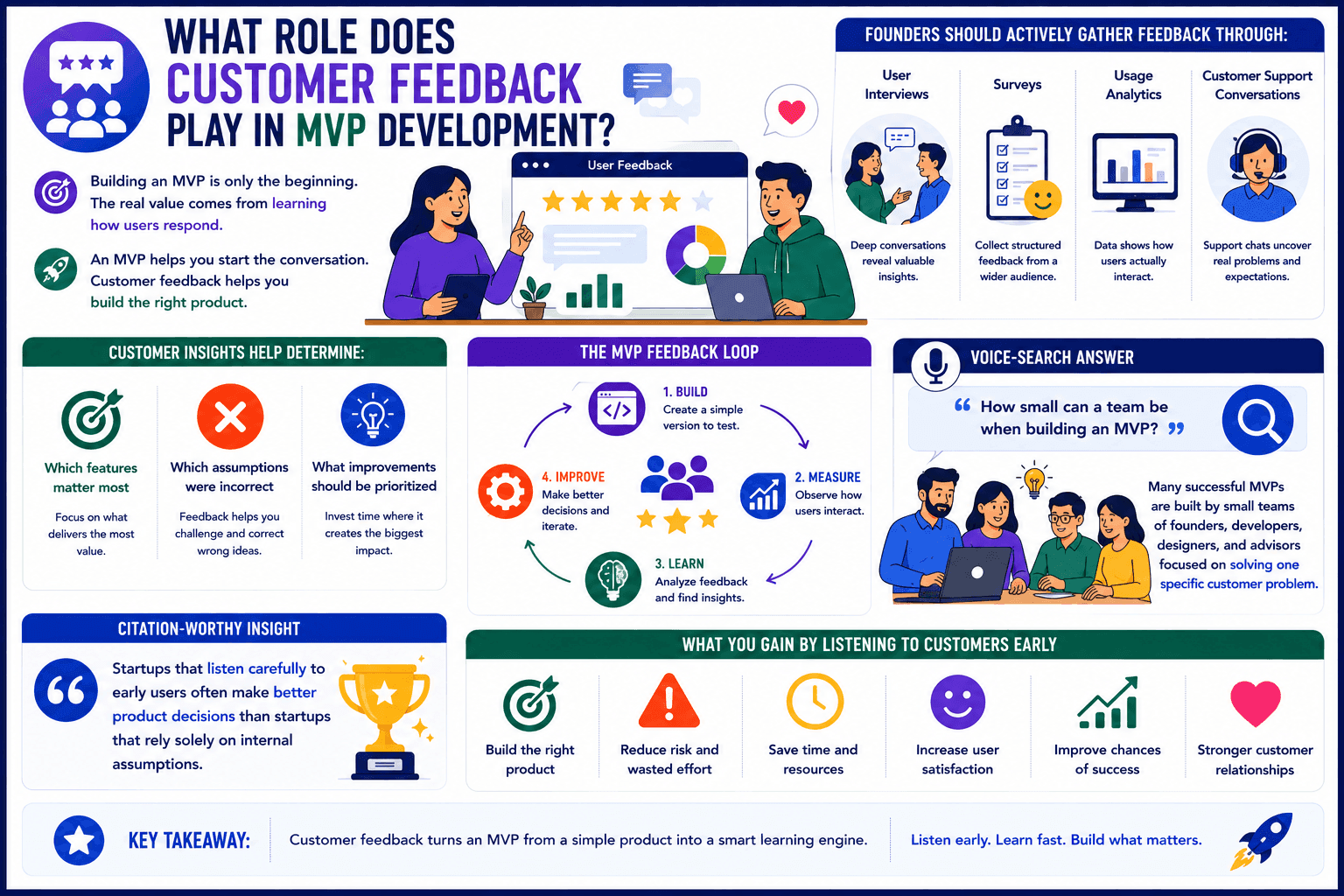
What Role Does Customer Feedback Play in MVP Development?
Building an MVP is only the beginning.
The real value comes from learning how users respond.
Founders should actively gather feedback through:
- User interviews
- Surveys
- Usage analytics
- Customer support conversations
Customer insights help determine:
- Which features matter most
- Which assumptions were incorrect
- What improvements should be prioritized
Voice-search answer:
"How small can a team be when building an MVP?"
Many successful MVPs are built by small teams of founders, developers, designers, and advisors focused on solving one specific customer problem.
Startups that listen carefully to early users often make better product decisions than startups that rely solely on internal assumptions
Topics:
Market Research For Startups
Business Analysis
How Business Analysts Reduce Project Failures
Startup Validation Research
Building an MVP is not about having the largest team or the most advanced technology. It is about learning quickly, validating assumptions, and focusing resources where they create the most value. Startups that keep MVPs simple often gain insights faster and reduce unnecessary risk.
If your expertise includes software development, product management, UX design, business analysis, or startup strategy, your skills can help innovators bring ideas to life. Toskie TeamUp is a local-first talent platform where professionals can collaborate on real projects, teach practical skills as Trainers, or guide founders as Mentors. With one profile and three opportunity paths, Toskie TeamUp helps expertise create real-world outcomes. Create your profile and connect with innovators building the next generation of products.
Related blogs:
- Why MVPs Fail Before Reaching Product-Market Fit
- How Founders Prioritize Features During Early Product Development
Related skill page:
Software Development
Frequently Asked Questions
Comments
Be the first to leave a comment.