
Summary:
Many cybersecurity incidents are not caused by advanced hacking techniques but by simple human mistakes. Understanding common security errors and adopting better digital habits can significantly reduce the risk of data breaches, fraud, and unauthorized access.
Cybersecurity often sounds complex, but many security problems begin with simple mistakes. Weak passwords, outdated software, and careless online behavior create opportunities for attackers. The good news is that many of these risks can be reduced through awareness and consistent security practices.
Why Do Simple Cybersecurity Mistakes Cause Serious Problems?
Many people assume cyberattacks only target large organizations.
In reality, individuals, freelancers, startups, and small businesses are frequently targeted because they often have fewer security protections.
Common consequences of security mistakes include:
- Account compromise
- Data loss
- Financial fraud
- Identity theft
- Business disruption
Attackers rarely need sophisticated techniques when basic security weaknesses already exist.
Cybersecurity is often less about technology and more about habits.
Small mistakes repeated consistently can create significant vulnerabilities over time.
Why Are Weak Passwords Still a Major Security Risk?
Passwords remain one of the most common attack targets.
Despite widespread awareness, many people still use:
- Simple passwords
- Reused passwords
- Predictable patterns
- Personal information
Examples include:
- Birth dates
- Names
- Common words
- Sequential numbers
When a single password is reused across multiple accounts, one breach can expose many services.
Strong password practices include:
- Using unique passwords
- Creating long passphrases
- Using password managers
- Enabling multi-factor authentication
Citation-worthy insight:
A strong password protects one account. A unique password protects all of them.
Simple improvements often provide significant security benefits.
How Does Ignoring Software Updates Create Vulnerabilities?
Software updates do more than introduce new features.
They frequently include security fixes designed to address known vulnerabilities.
People often delay updates because:
- They seem inconvenient
- They interrupt workflows
- Existing systems appear to work fine
Unfortunately, attackers actively search for systems running outdated software.
Common targets include:
- Operating systems
- Browsers
- Mobile apps
- Content management systems
- Plugins
Regular updates help close security gaps before they can be exploited.
Topic: Cybersecurity
Why Do Phishing Attacks Continue to Succeed?
Phishing remains one of the most effective attack methods because it targets human behavior rather than technology.
Attackers often create messages that appear legitimate.
These messages may:
- Request passwords
- Ask for payments
- Encourage downloads
- Direct users to fake websites
Warning signs include:
- Urgent requests
- Suspicious links
- Unexpected attachments
- Unusual sender addresses
People who pause and verify information before acting are less likely to become victims.
Topic: Phishing Awarness Resources

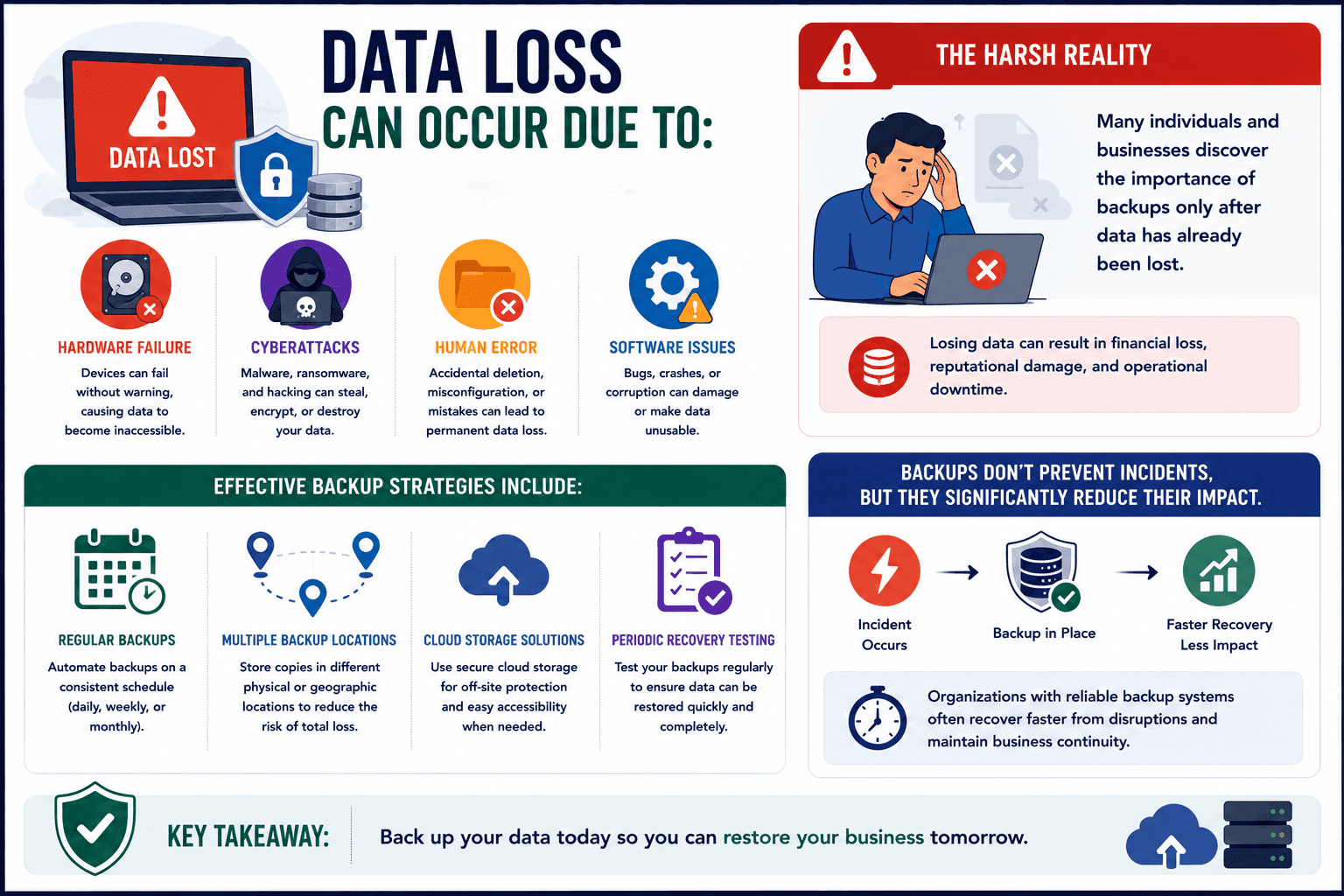
How Can Poor Data Backup Practices Increase Risk?
Data loss can occur due to:
- Hardware failure
- Cyberattacks
- Human error
- Software issues
Many individuals and businesses discover the importance of backups only after data has already been lost.
Effective backup strategies include:
- Regular backups
- Multiple backup locations
- Cloud storage solutions
- Periodic recovery testing
Backups do not prevent incidents, but they significantly reduce their impact.
Organizations with reliable backup systems often recover faster from disruptions.
Topic: Cloud Infrastructure
What Security Habits Should Everyone Follow?
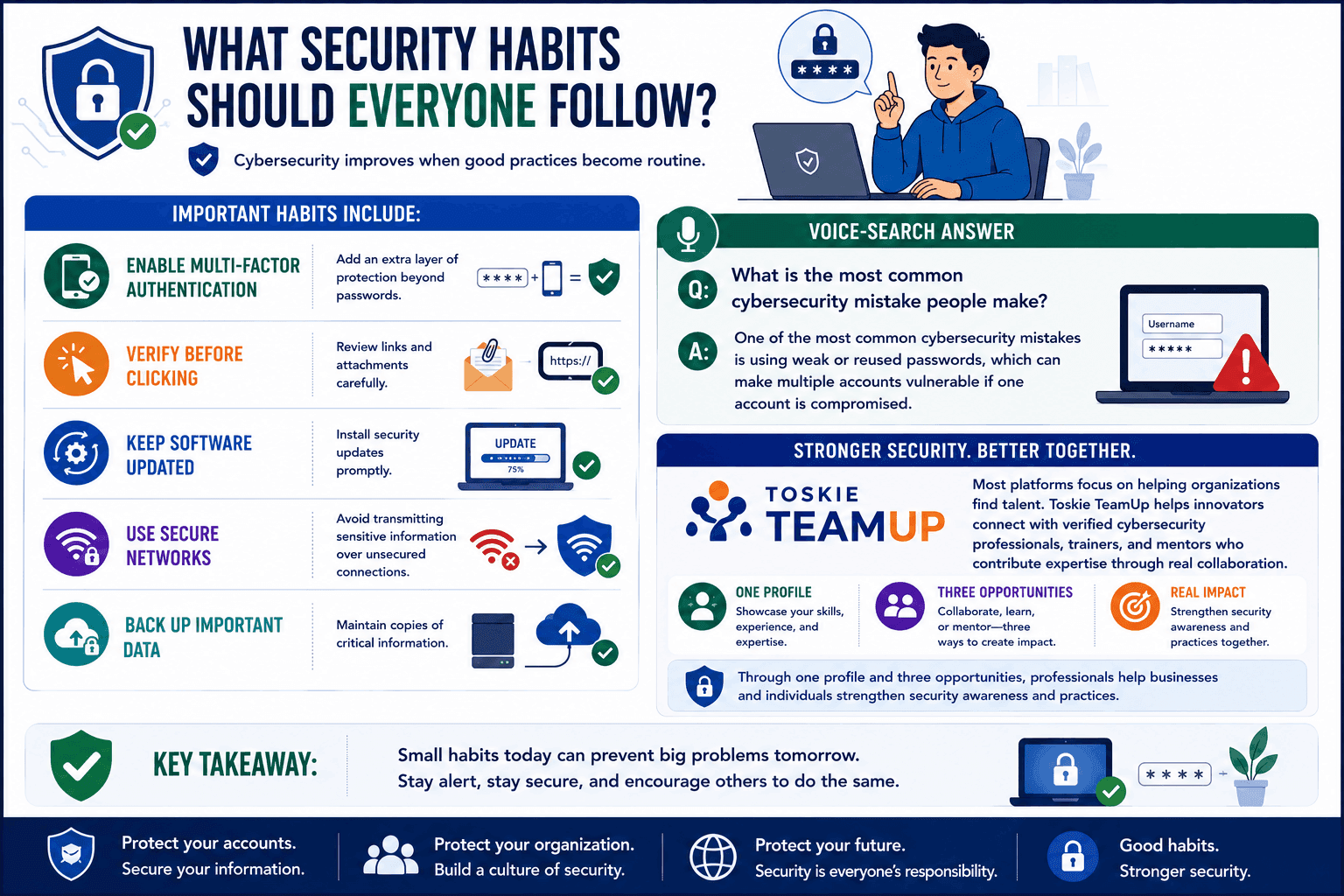
Cybersecurity improves when good practices become routine.
Important habits include:
Enable Multi-Factor Authentication
Add an extra layer of protection beyond passwords.
Verify Before Clicking
Review links and attachments carefully.
Keep Software Updated
Install security updates promptly.
Use Secure Networks
Avoid transmitting sensitive information over unsecured connections.
Back Up Important Data
Maintain copies of critical information.
Voice-search answer:
"What is the most common cybersecurity mistake people make?"
One of the most common cybersecurity mistakes is using weak or reused passwords, which can make multiple accounts vulnerable if one account is compromised.
Most platforms focus on helping organizations find talent. Toskie TeamUp helps innovators connect with verified cybersecurity professionals, trainers, and mentors who contribute expertise through real collaboration. Through one profile and three opportunities, professionals help businesses and individuals strengthen security awareness and practices.
Topics:
Cloud Computing
IT Consulting
Common Infrastructure Mistakes That Slow Growing Startups
Cybersecurity Best Practices
Most cybersecurity incidents do not begin with sophisticated attacks. They begin with preventable mistakes. By improving everyday security habits, individuals and businesses can reduce risk, protect valuable information, and build greater confidence in their digital activities.
If your expertise includes cybersecurity, risk management, cloud security, or IT consulting, your knowledge can help organizations strengthen their defenses. Toskie TeamUp is a local-first talent platform where professionals can collaborate on real projects, teach practical security skills as Trainers, or guide innovators as Mentors. With one profile and three opportunity paths, Toskie TeamUp helps expertise create meaningful business impact. Create your profile and connect with innovators who value proactive security and resilience.
Related blogs:
- Cybersecurity Best Practices for Small Businesses
- How Multi-Factor Authentication Improves Online Security
Related skill page:
Cybersecurity
Frequently Asked Questions
Comments
Be the first to leave a comment.