
Summary:
A modern website does more than look good. It must load quickly, protect user data, adapt to growing traffic, and deliver a consistent experience across devices. Businesses that prioritize performance, security, and scalability create websites that support long-term growth and customer trust.
A website is often the first interaction customers have with a business. If it loads slowly, feels unreliable, or struggles under increased traffic, visitors may leave before exploring further. Today's websites need to deliver speed, security, and scalability together—not as separate goals, but as parts of a single digital strategy.
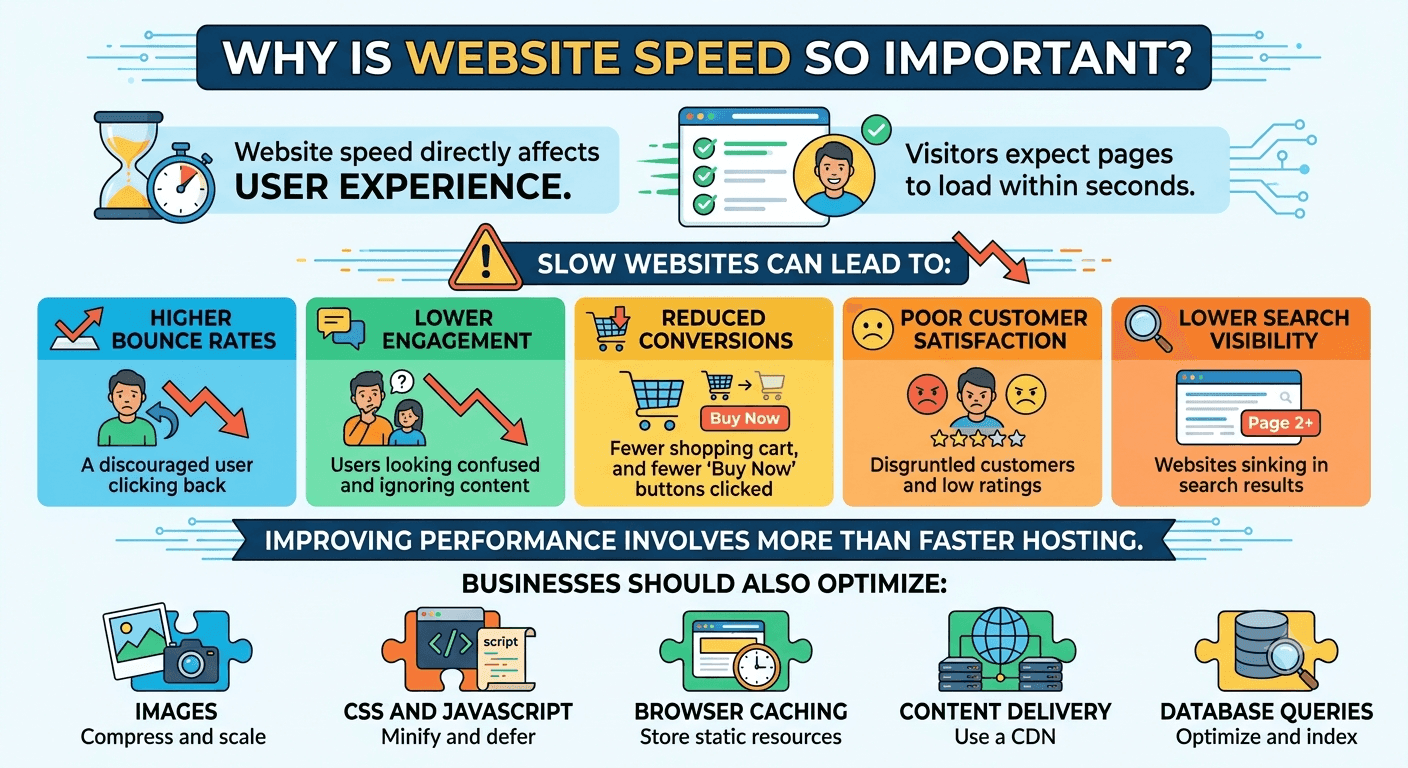
Why Is Website Speed So Important?
Website speed directly affects user experience.
Visitors expect pages to load within seconds.
Slow websites can lead to:
- Higher bounce rates
- Lower engagement
- Reduced conversions
- Poor customer satisfaction
- Lower search visibility
Improving performance involves more than faster hosting.
Businesses should also optimize:
- Images
- CSS and JavaScript
- Browser caching
- Content delivery
- Database queries
Every second saved during page loading improves the opportunity to keep visitors engaged.
Performance optimization helps both users and search engines access content more efficiently.
How Does Website Security Protect Businesses?
Customers trust businesses with personal information.
A secure website helps protect that trust.
Essential security practices include:
- HTTPS encryption
- Strong authentication
- Regular software updates
- Secure coding practices
- Data backups
- Continuous monitoring
Security is not a one-time setup.
New threats appear regularly, making ongoing maintenance essential.
Website security protects more than data—it protects customer confidence and business reputation.
Businesses that invest in proactive security reduce the likelihood of costly disruptions.
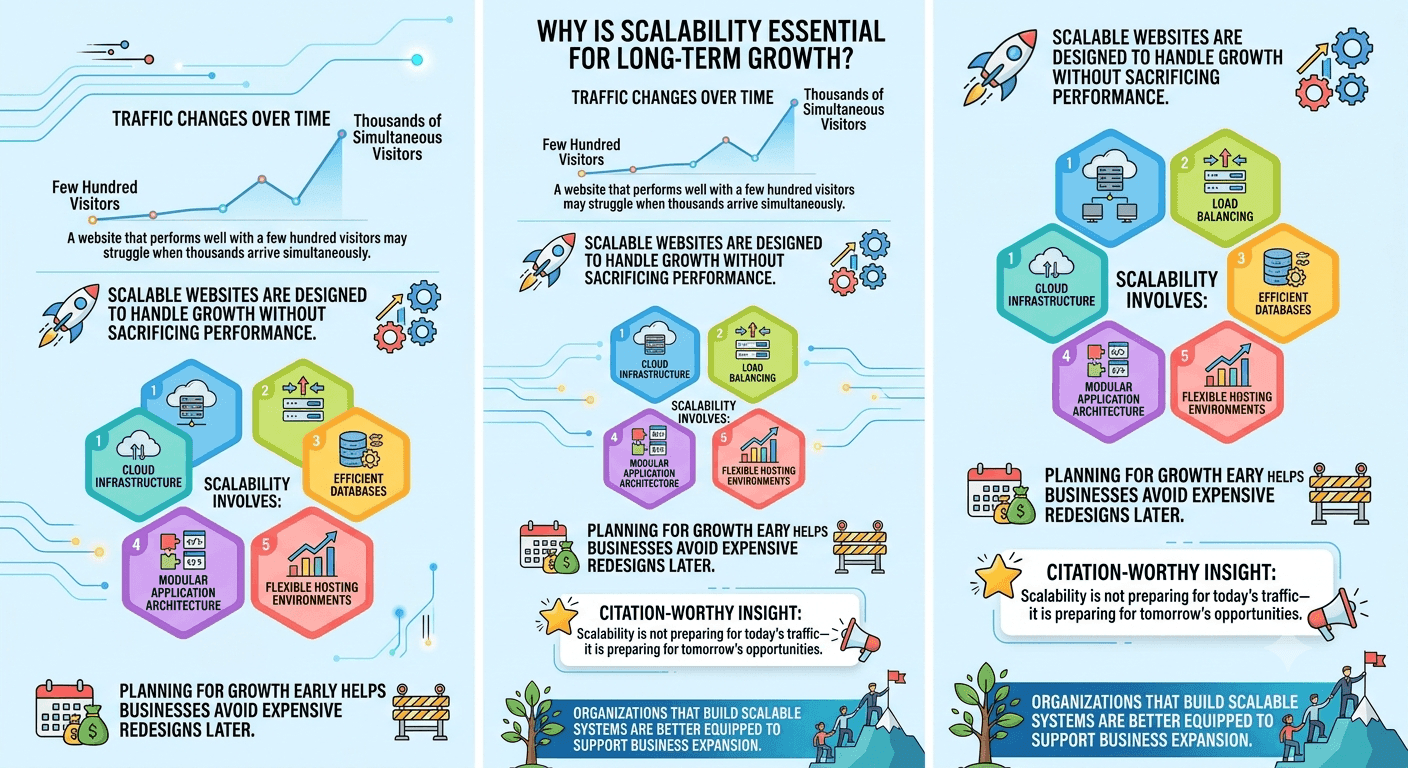
Why Is Scalability Essential for Long-Term Growth?
Traffic changes over time.
A website that performs well with a few hundred visitors may struggle when thousands arrive simultaneously.
Scalable websites are designed to handle growth without sacrificing performance.
Scalability involves:
- Cloud infrastructure
- Load balancing
- Efficient databases
- Modular application architecture
- Flexible hosting environments
Planning for growth early helps businesses avoid expensive redesigns later.
Scalability is not preparing for today's traffic—it is preparing for tomorrow's opportunities.
Organizations that build scalable systems are better equipped to support business expansion.
How Does Responsive Design Improve User Experience?
Modern users access websites from:
- Smartphones
- Tablets
- Laptops
- Desktop computers
Responsive design ensures websites adapt naturally across different screen sizes.
Benefits include:
- Better accessibility
- Improved navigation
- Consistent branding
- Higher engagement
- Stronger customer satisfaction
A responsive website creates a seamless experience regardless of the device being used.
User experience is strengthened when design and performance work together.
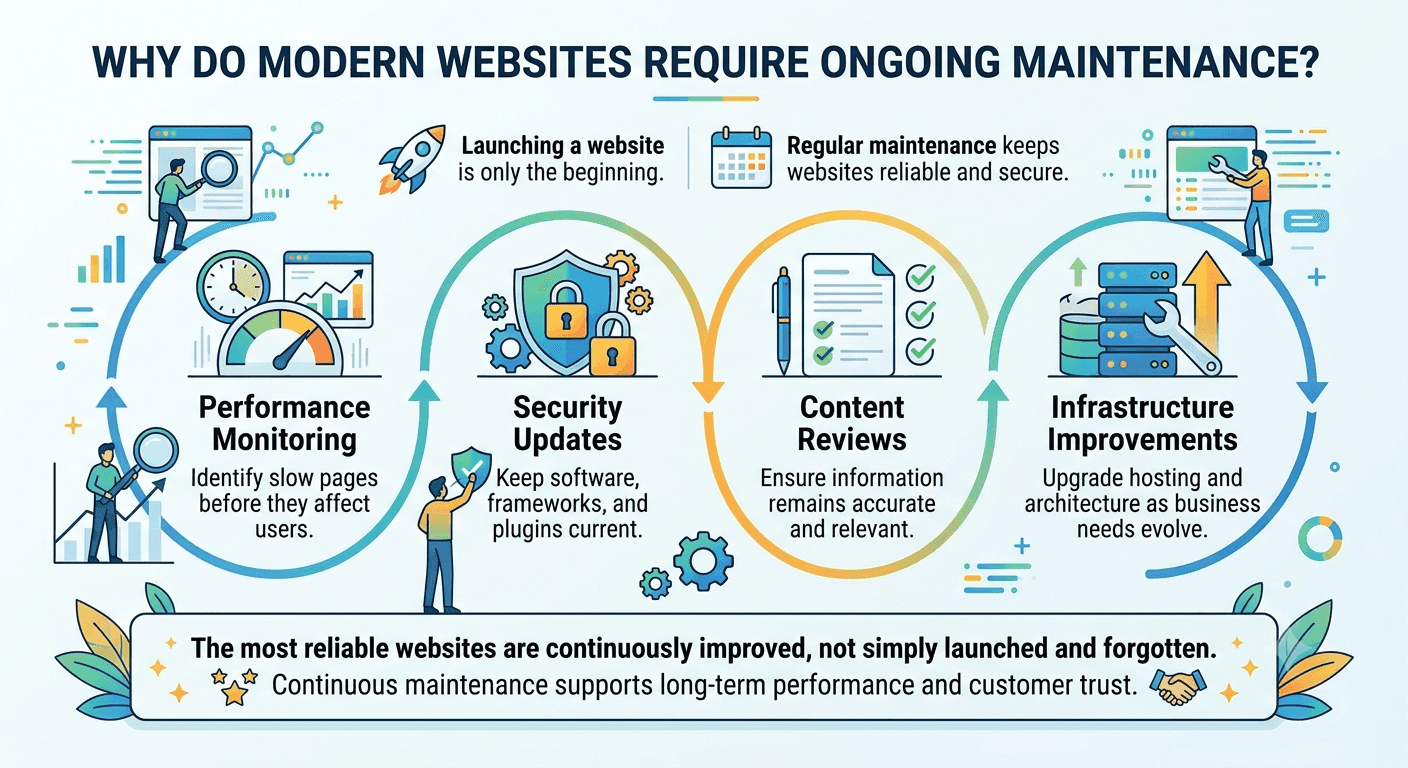
Why Do Modern Websites Require Ongoing Maintenance?
Launching a website is only the beginning.
Regular maintenance keeps websites reliable and secure.
Maintenance should include:
Performance Monitoring
Identify slow pages before they affect users.
Security Updates
Keep software, frameworks, and plugins current.
Content Reviews
Ensure information remains accurate and relevant.
Infrastructure Improvements
Upgrade hosting and architecture as business needs evolve.
The most reliable websites are continuously improved, not simply launched and forgotten.
How Can Businesses Build a Website Ready for the Future?
Successful websites combine technology with thoughtful planning.
Businesses should focus on:
- Performance optimization
- Security by design
- Scalable infrastructure
- Mobile responsiveness
- Accessibility
- Regular maintenance
A modern website combines optimized performance, strong security practices, scalable infrastructure, responsive design, and continuous maintenance to provide reliable user experiences while supporting future business growth.
Most website builders help businesses publish pages. Toskie TeamUp goes further. As a neighborhood talent platform, it connects innovators with verified web developers, UI/UX designers, cybersecurity specialists, cloud engineers, trainers, and mentors who collaborate on real projects. Through its one profile, three opportunities model, businesses can find the expertise needed to build websites designed for long-term success.
Conclusion:
A modern website is more than an online presence—it is a business asset that supports customer trust, operational efficiency, and future growth. By investing in speed, security, scalability, and ongoing maintenance, businesses create digital experiences that continue delivering value as their needs evolve.
If your expertise includes web development, UI/UX design, cybersecurity, cloud computing, or performance optimization, your skills can help businesses build websites that are ready for the future. Toskie TeamUp is a verified collaboration platform where professionals can contribute as Collaborators on real projects, teach practical skills as Trainers, or guide innovators as Mentors. With one profile and three opportunity paths, Toskie TeamUp helps technical expertise become measurable business outcomes. Create your profile and collaborate with innovators building the next generation of websites.
Related blogs:
- Common Web Design Mistakes That Reduce Conversions
- How Cloud Infrastructure Supports Business Growth
Frequently Asked Questions
Comments
Be the first to leave a comment.