
Summary:
Building an investment portfolio is not about picking the hottest stocks. It starts with understanding your goals, risk tolerance, time horizon, and how different assets work together. This guide explains the key principles every new investor should know before creating a portfolio that supports long-term financial growth.
Before building an investment portfolio, new investors need to understand one simple truth: a portfolio is a plan, not a collection of random investments. The strongest portfolios are built around goals, risk management, and consistency rather than short-term market excitement.
What Does Building an Investment Portfolio Actually Mean?
Many beginners think a portfolio is simply a list of stocks they own. In reality, a portfolio is the complete combination of assets you choose to hold in order to achieve specific financial objectives.
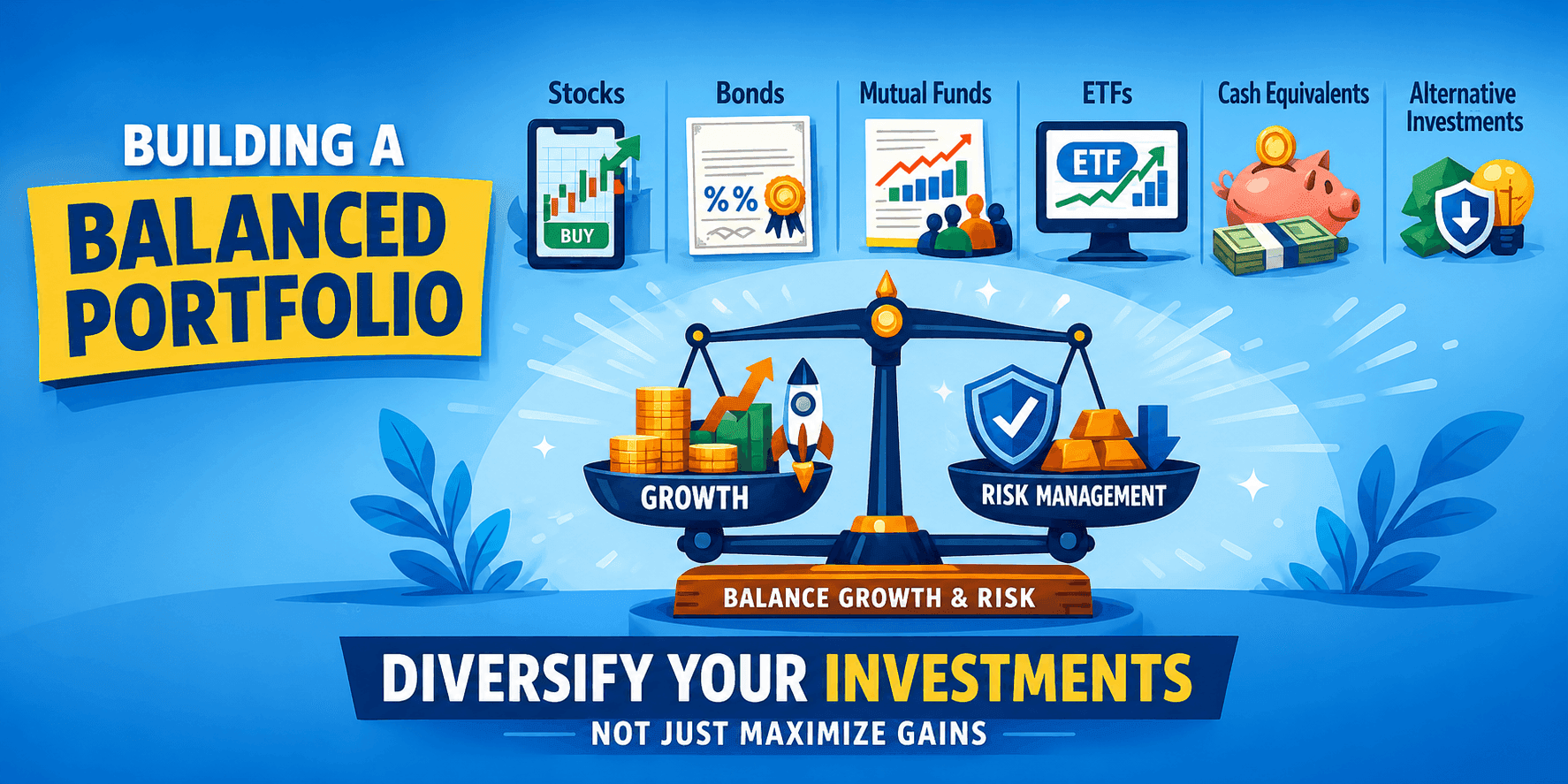
A portfolio may include:
- Stocks
- Bonds
- Mutual funds
- Exchange-traded funds (ETFs)
- Cash equivalents
- Alternative investments
The purpose of a portfolio is not to maximize gains from a single investment. Its purpose is to balance growth opportunities with risk management.
Think of a portfolio like a sports team. One star player cannot win every game alone. Success comes from assembling different players with different strengths that work together over time.
This is why experienced investors spend more time on asset allocation than on predicting the next market winner.
Why Should You Define Financial Goals Before Investing?
Every investment decision becomes easier when you know what you're investing for.
Different goals require different portfolio strategies.
Examples include:
- Buying a house in five years
- Building retirement savings
- Funding higher education
- Creating passive income
- Preserving wealth
Someone investing for retirement in thirty years can generally take more risk than someone who needs money for a down payment next year.
Without a clear goal, investors often react emotionally to market fluctuations. They buy when prices rise and panic when prices fall.
A well-defined goal creates discipline.
When building an investment portfolio, your objective should determine:
- Asset allocation
- Investment selection
- Risk level
- Expected returns
- Investment timeline
The portfolio should serve the goal—not the other way around.
How Much Risk Should a New Investor Take?
One of the biggest mistakes new investors make is copying someone else's portfolio.
Risk tolerance varies significantly from person to person.
Factors that influence risk tolerance include:
- Age
- Income stability
- Financial obligations
- Investment experience
- Time horizon
- Emotional comfort with market volatility
A portfolio that loses 20% during a market correction may be manageable for one investor but stressful for another.
Understanding your risk tolerance helps prevent emotional decisions.
A useful question to ask yourself is:
"If my portfolio declined significantly for a few months, would I stay invested or feel compelled to sell?"
Your answer reveals more about your ideal portfolio than any market prediction ever could.
A sustainable investment strategy is one you can follow consistently during both good and bad market conditions.
Why Is Diversification So Important?
Diversification is one of the most effective ways to reduce unnecessary investment risk.
Instead of placing all your money into a single company, sector, or asset class, diversification spreads investments across multiple areas.
This approach helps protect the portfolio when one investment underperforms.
For example, a diversified portfolio may contain:
- Large-cap stocks
- Small-cap stocks
- International equities
- Bonds
- Index funds
- Cash reserves
Citation-worthy insight:
Diversification does not eliminate risk, but it reduces the damage that any single investment can cause to an entire portfolio.
Another important principle:
Successful long-term investing depends more on managing risk consistently than on finding the perfect investment.
Most professional investors focus heavily on diversification because preserving capital is just as important as growing it.

Should Beginners Focus on Timing the Market?
Many new investors spend enormous amounts of time trying to predict market movements.
History shows that consistently timing the market is extremely difficult.
Instead of attempting to guess short-term price movements, many successful investors focus on:
- Regular investing
- Long-term holding periods
- Portfolio rebalancing
- Diversification
- Cost management
A common strategy is investing fixed amounts at regular intervals, regardless of market conditions.
This approach helps reduce emotional decision-making and encourages discipline.
Voice-search answer:
"Should beginners wait for the perfect time to invest?"
No. Most financial experts agree that consistently investing according to a long-term plan is generally more effective than trying to predict short-term market highs and lows.
Time in the market often matters more than timing the market.
What Habits Help Investors Build Strong Portfolios Over Time?
Building a portfolio is not a one-time activity.
Markets change. Personal circumstances change. Financial goals evolve.
Strong investors develop habits that support long-term success.
Important habits include:
Review Periodically
Check whether your portfolio still aligns with your goals and risk tolerance.
Rebalance When Necessary
Over time, some investments may grow faster than others. Rebalancing restores your intended asset allocation.
Continue Learning
Financial markets evolve constantly. Ongoing education improves decision-making.
Avoid Emotional Reactions
Fear and greed often lead to poor investment decisions.
Stay Focused on the Long Term
Short-term volatility is normal. Long-term discipline often produces better outcomes than frequent trading.
Beginner's Guide to Financial Planning
Understanding Risk and Return in Investing
Every successful portfolio starts long before the first investment is purchased. It begins with understanding goals, risk, diversification, and the discipline required to stay committed to a strategy. The investors who succeed over time are usually not the ones making the boldest moves—they are the ones making thoughtful decisions consistently.
If you're building expertise in finance, investing, or wealth management, opportunities often grow through meaningful professional connections. Toskie TeamUp is a neighborhood talent platform where professionals can participate as Collaborators, share knowledge as Trainers, or guide others as Mentors. With one profile and three opportunity paths, Toskie TeamUp helps skilled professionals turn expertise into real-world impact. Create a focused profile and start building your professional reputation through meaningful collaboration.
Related blogs:
- How Asset Allocation Shapes Long-Term Investment Success
- Common Investing Mistakes Beginners Make and How to Avoid Them
Related skill page:
Financial Analysis
Frequently Asked Questions
Comments
Be the first to leave a comment.