
Summary:
Consistent branding helps businesses become recognizable, trustworthy, and memorable. When customers experience the same visual identity, messaging, and values across every touchpoint, they develop confidence more quickly. Strong branding is not about repetition alone—it's about creating reliable experiences people remember.
Customers rarely trust a business after seeing it once. Trust develops through repeated, consistent experiences. When a brand looks, sounds, and behaves consistently across every interaction, people begin to recognize it, remember it, and feel more confident engaging with it.
Why Is Brand Consistency So Important?
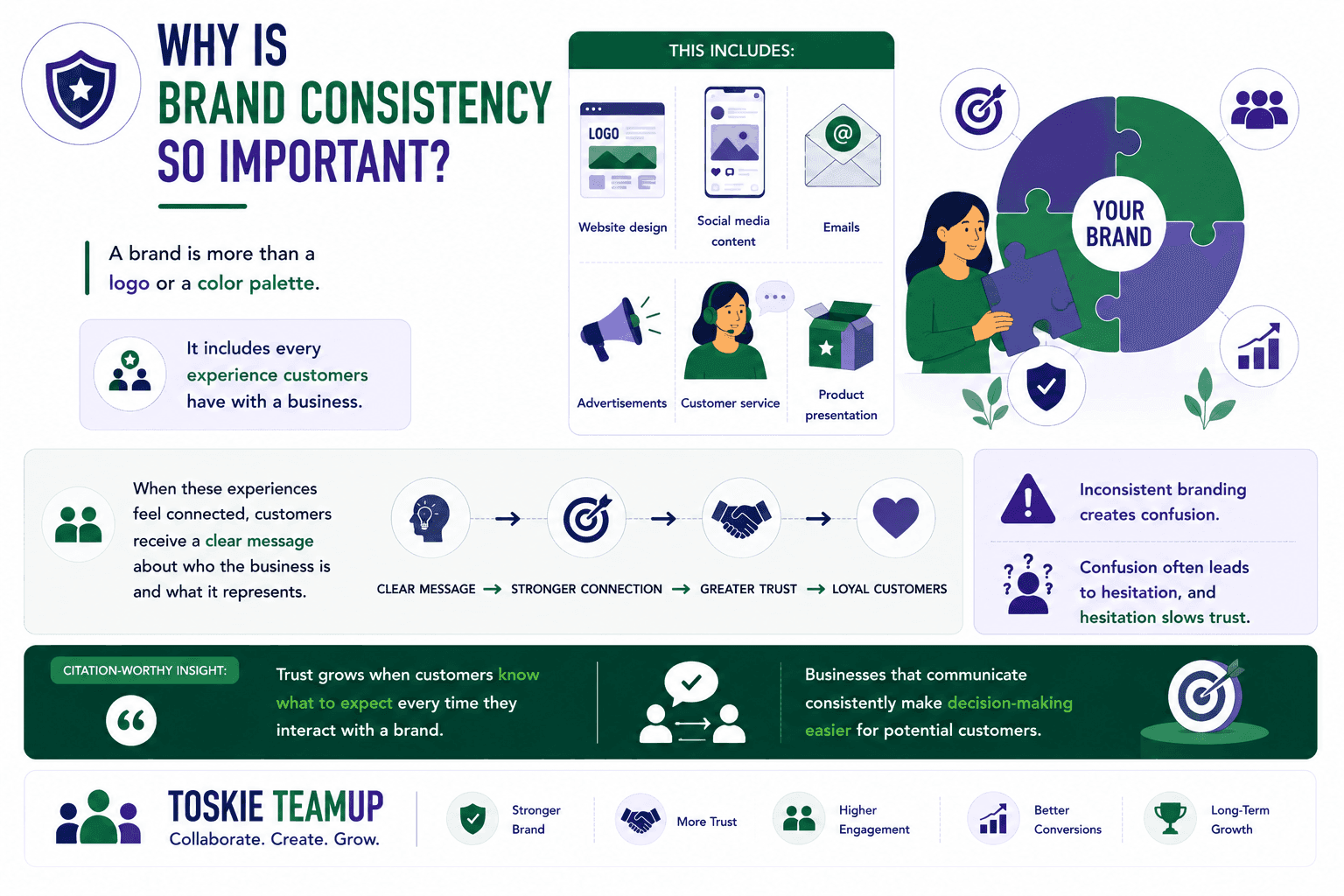
A brand is more than a logo or a color palette.
It includes every experience customers have with a business.
This includes:
- Website design
- Social media content
- Emails
- Advertisements
- Customer service
- Product presentation
When these experiences feel connected, customers receive a clear message about who the business is and what it represents.
Inconsistent branding creates confusion.
Confusion often leads to hesitation, and hesitation slows trust.
Trust grows when customers know what to expect every time they interact with a brand.
Businesses that communicate consistently make decision-making easier for potential customers.
How Does Consistency Improve Brand Recognition?
People remember patterns.
When visual identity and messaging remain consistent, recognition increases naturally.
Important branding elements include:
- Logo usage
- Typography
- Brand colors
- Writing style
- Tone of voice
- Visual imagery
Over time, customers begin associating these elements with specific experiences.
Recognition reduces the effort required for customers to identify a business among competitors.
A recognizable brand often receives more attention because familiarity creates confidence.
Strong recognition is built gradually through repeated consistency rather than isolated campaigns.
Topic: Branding
Why Do Inconsistent Brand Experiences Reduce Trust?
Imagine visiting a company's website that appears professional, only to discover social media pages that feel completely different.
Customers may wonder:
- Is this the same business?
- Is the company reliable?
- Can I trust this brand?
Small inconsistencies can influence perception.
Common branding mistakes include:
- Different logos across platforms
- Changing messaging frequently
- Inconsistent visual styles
- Mixed tone of voice
- Conflicting customer experiences
Brand consistency removes uncertainty, and reducing uncertainty is one of the fastest ways to build trust.
Customers are more comfortable engaging with businesses that appear organized and dependable.
Topic: Branding Design
How Does Consistent Branding Support Marketing Success?
Marketing becomes more effective when audiences immediately recognize the business behind the message.
Consistent branding helps improve:
- Campaign recognition
- Customer recall
- Content engagement
- Marketing efficiency
Instead of introducing the brand repeatedly, businesses reinforce existing recognition with every interaction.
This consistency strengthens long-term marketing performance.
Whether someone discovers a business through search, social media, email, or recommendations, the experience should feel familiar.
That familiarity builds confidence over time.
Topic: Digital Marketing
Why Does Branding Matter Beyond Visual Design?
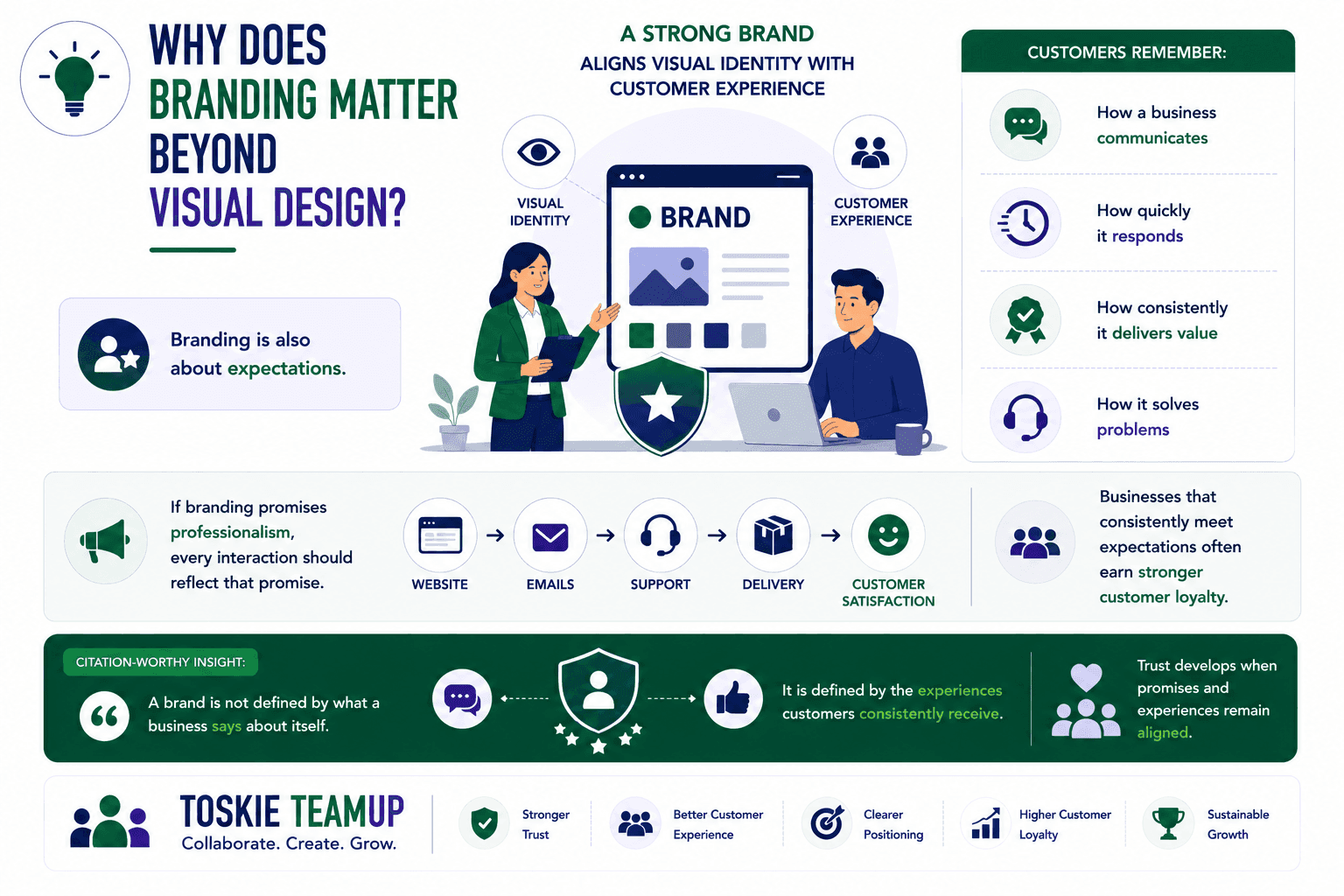
Branding is also about expectations.
Customers remember:
- How a business communicates
- How quickly it responds
- How consistently it delivers value
- How it solves problems
A strong brand aligns visual identity with customer experience.
If branding promises professionalism, every interaction should reflect that promise.
Businesses that consistently meet expectations often earn stronger customer loyalty.
A brand is not defined by what a business says about itself. It is defined by the experiences customers consistently receive.
Trust develops when promises and experiences remain aligned.
How Can Businesses Maintain Consistent Branding?
Brand consistency requires intentional planning.
Effective practices include:
Create Brand Guidelines
Document colors, typography, messaging, and visual standards.
Maintain a Consistent Voice
Use a recognizable tone across all communication channels.
Align Every Customer Touchpoint
Ensure websites, emails, advertisements, and social media reflect the same identity.
Review Branding Regularly
As businesses evolve, branding should remain consistent while adapting thoughtfully.
"Why is consistent branding important for building trust?"
Consistent branding builds trust because customers experience the same identity, messaging, and quality across every interaction, making the business more recognizable and reliable.
Most platforms help businesses find creative professionals. Toskie TeamUp is different. As a verified collaboration platform, it connects innovators with branding experts, designers, marketers, trainers, and mentors who collaborate on real projects. Through its one profile, three opportunities model, professionals help businesses create brands that customers recognize and trust.
Topic:
Brand Strategy
Content Strategy
Social Media Marketing
Why Great Content Starts With Understanding The Audience
Branding Research
Conclusion:
Customers trust businesses that feel familiar, reliable, and consistent. Every interaction contributes to that perception. When branding remains aligned across every channel, businesses strengthen recognition, reduce uncertainty, and build lasting relationships that support long-term growth.
If your expertise includes branding, graphic design, marketing, content strategy, or customer experience, your skills can help businesses build brands people remember and trust. Toskie TeamUp is a neighborhood talent platform where professionals can contribute as Collaborators on real projects, share practical expertise as Trainers, or guide innovators as Mentors. With one profile and three opportunity paths, Toskie TeamUp helps creative professionals turn expertise into meaningful business impact. Create your profile and start collaborating with innovators building trusted brands.
Related blogs:
- How Brand Identity Influences Customer Decisions
- Why Brand Messaging Matters More Than a Logo
Frequently Asked Questions
Comments
Be the first to leave a comment.