
Summary:
User retention depends on more than products and services. The quality of a website or application's front end directly affects how users interact with a business. Fast, responsive, and intuitive interfaces often encourage users to stay longer, return more frequently, and engage more deeply.
A user may love your product, but if your website or application feels slow, confusing, or difficult to use, they may never come back. Front end development shapes the experience users see and interact with every day, making it a critical factor in customer retention.
Why Is Front End Development Important for User Retention?
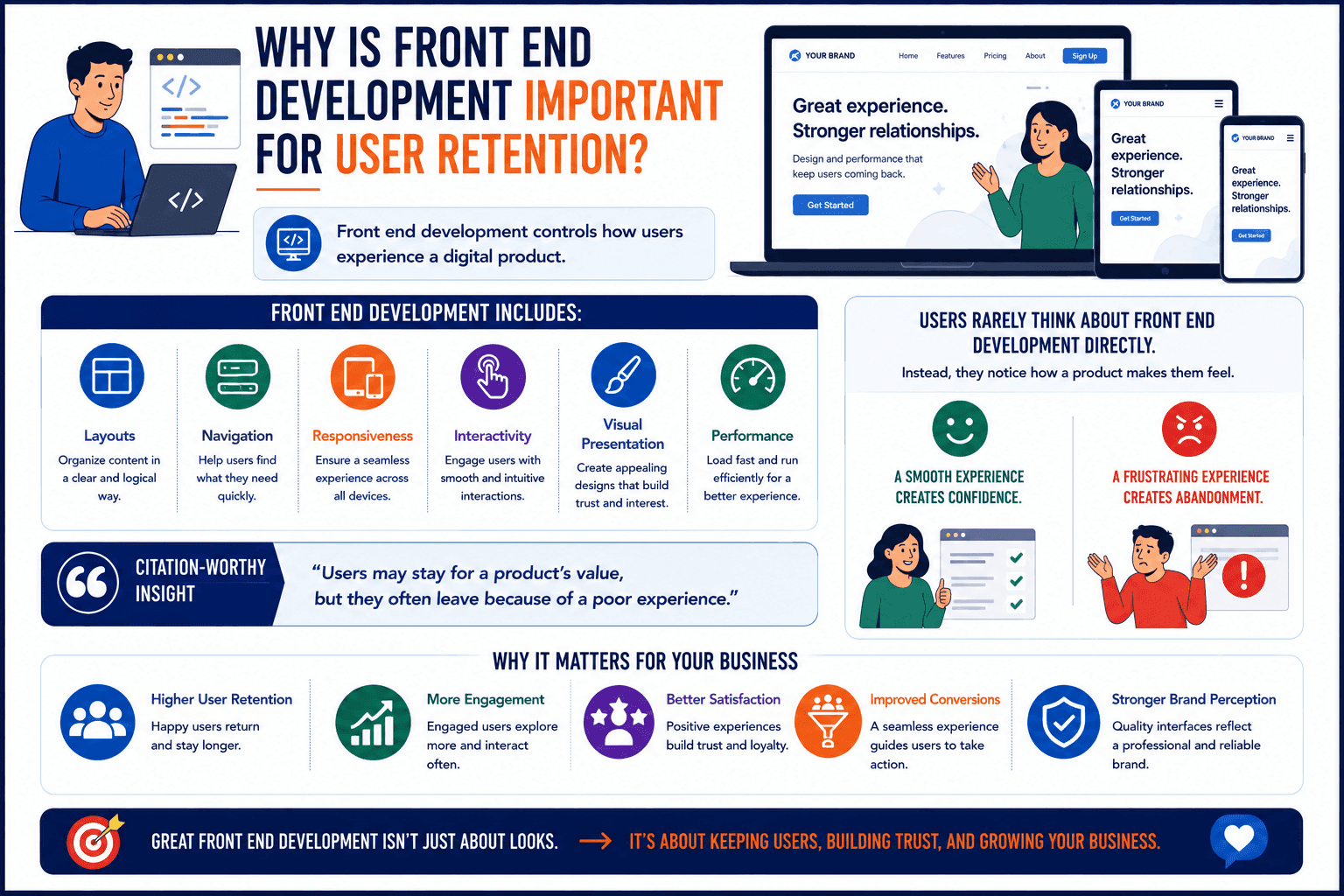
Front end development controls how users experience a digital product.
It includes:
- Layouts
- Navigation
- Responsiveness
- Interactivity
- Visual presentation
- Performance
Users rarely think about front end development directly.
Instead, they notice how a product makes them feel.
A smooth experience creates confidence.
A frustrating experience creates abandonment.
Users may stay for a product's value, but they often leave because of a poor experience.
Businesses that prioritize front end quality often improve customer satisfaction and long-term engagement.
How Does Website Speed Influence Retention?
Speed is one of the most important factors affecting user behavior.
Visitors expect websites and applications to respond quickly.
Slow loading times can lead to:
- Higher bounce rates
- Reduced engagement
- Lower customer satisfaction
- Fewer return visits
Performance issues commonly result from:
- Unoptimized images
- Excessive scripts
- Poor code efficiency
- Inefficient rendering
Even small delays can create frustration.
Retention begins before users interact with features—it begins while pages are loading.
Fast experiences help establish trust and encourage continued usage.
Topics:
Web Development
Website Performance Research
Why Does Responsiveness Matter Across Devices?
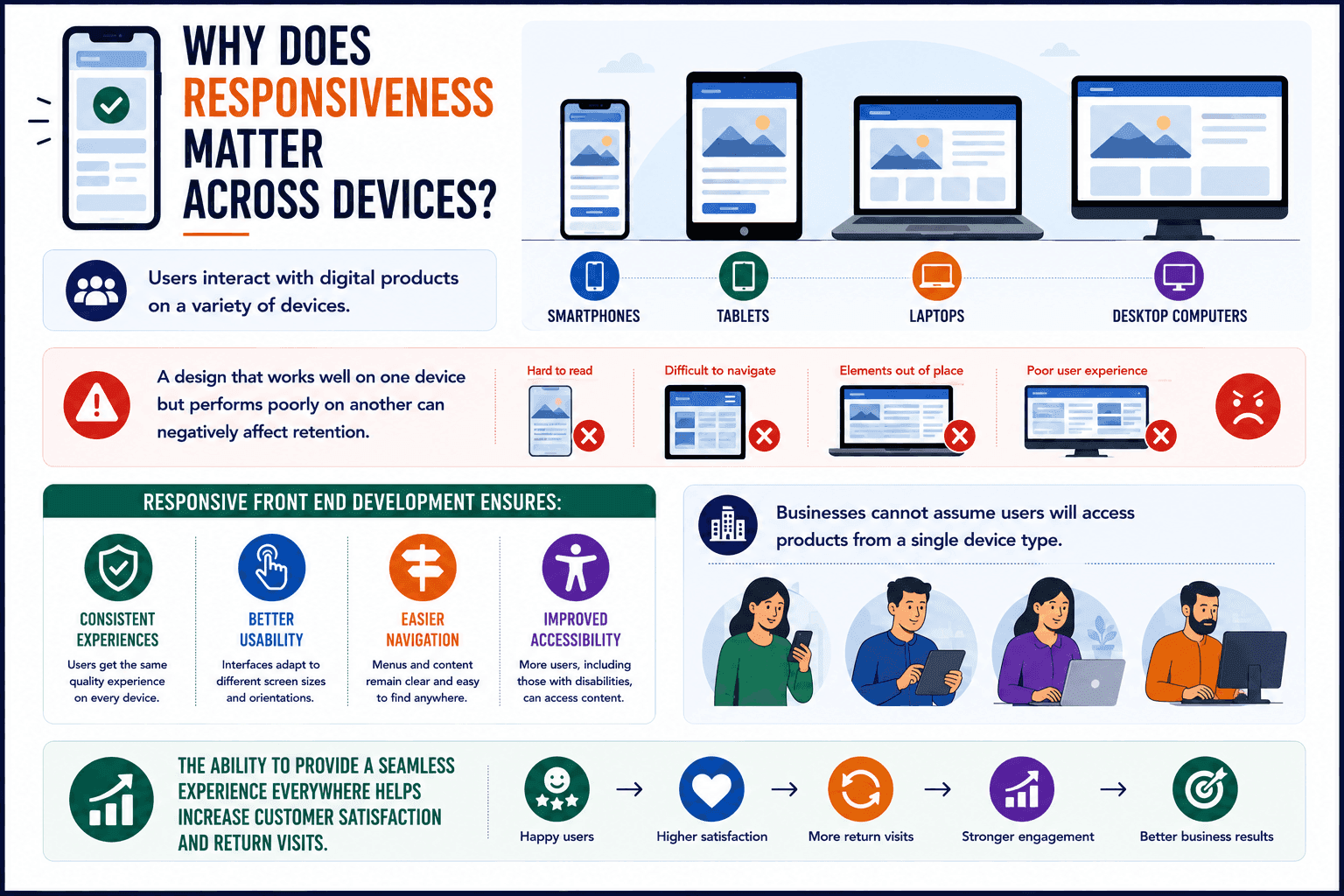
Users interact with digital products on a variety of devices.
These include:
- Smartphones
- Tablets
- Laptops
- Desktop computers
A design that works well on one device but performs poorly on another can negatively affect retention.
Responsive front end development ensures:
- Consistent experiences
- Better usability
- Easier navigation
- Improved accessibility
Businesses cannot assume users will access products from a single device type.
The ability to provide a seamless experience everywhere helps increase customer satisfaction and return visits.
Topic: Mobile App Development
How Does Front End Development Improve User Experience?
User experience depends heavily on how people interact with a product.
Front end development influences:
- Navigation clarity
- Content readability
- Interface consistency
- Visual hierarchy
- Interaction feedback
Users should be able to complete tasks without confusion.
For example:
- Finding information
- Completing forms
- Making purchases
- Accessing support
When experiences feel intuitive, users are more likely to continue engaging with a product.
Poor experiences create friction that encourages users to leave.
Topic: UI/UX Design
Can Better Front End Development Increase Customer Trust?
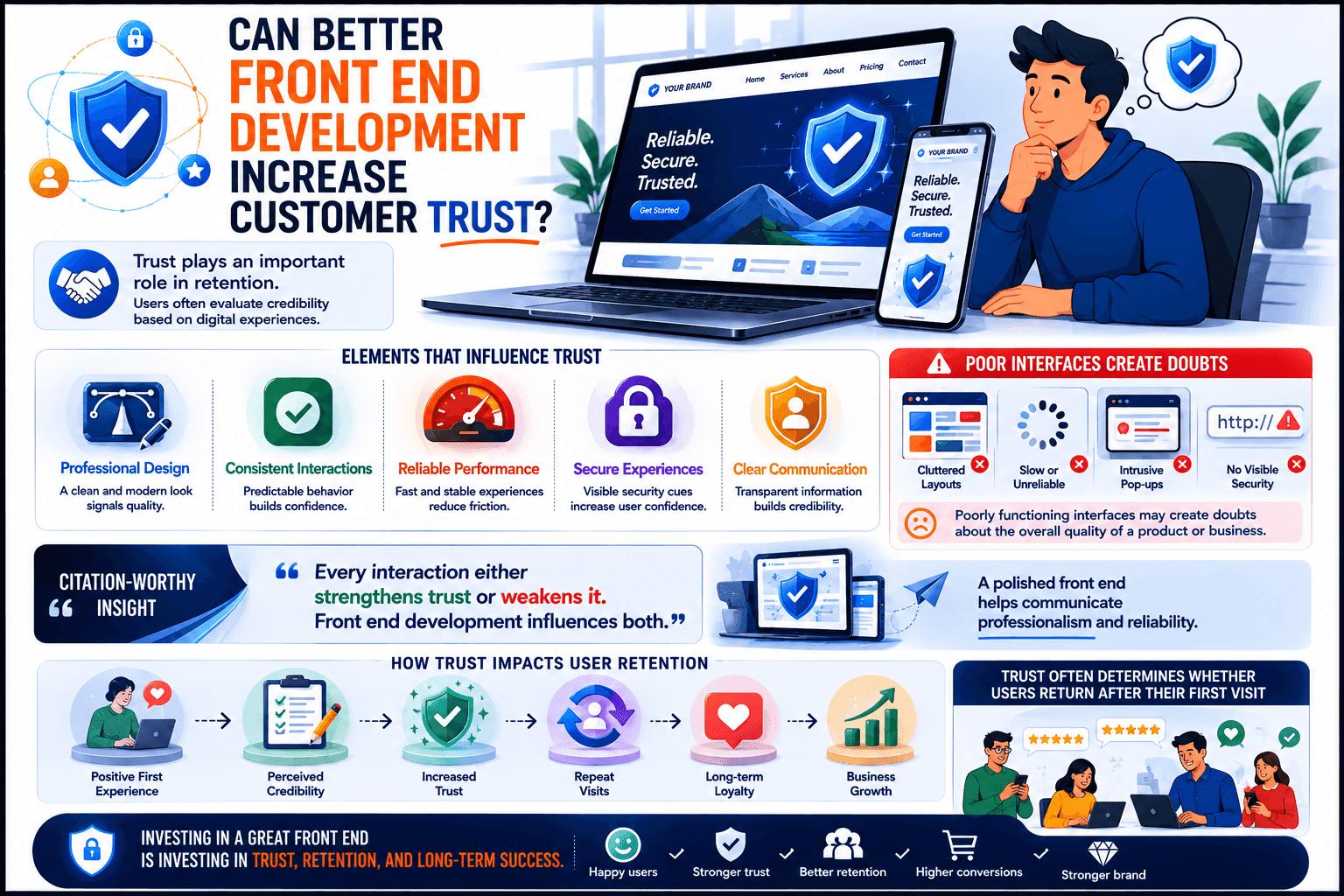
Trust plays an important role in retention.
Users often evaluate credibility based on digital experiences.
Elements that influence trust include:
- Professional design
- Consistent interactions
- Reliable performance
- Secure user experiences
Poorly functioning interfaces may create doubts about the overall quality of a product or business.
A polished front end helps communicate professionalism and reliability.
Every interaction either strengthens trust or weakens it. Front end development influences both.
Trust often determines whether users return after their first visit.
How Can Businesses Improve Front End Experiences?
Improving front end development requires balancing performance, usability, and visual quality.
Best practices include:
Optimize Performance
Reduce loading times and unnecessary resources.
Prioritize Mobile Experiences
Ensure functionality across all screen sizes.
Simplify Navigation
Help users find information quickly.
Test Regularly
Identify usability issues through real user feedback.
Voice-search answer:
"How does front end development affect user retention?"
Front end development affects user retention by influencing speed, usability, responsiveness, and overall user experience, all of which impact whether users return to a product.
Most platforms focus on helping businesses find technical talent. Toskie TeamUp helps innovators connect with verified front end developers, UI designers, UX specialists, trainers, and mentors who contribute to real projects. Through one profile and three opportunities, professionals help businesses create experiences that encourage users to stay engaged.
Topics:
JavaScript Development
Common Web Design Mistakes That Reduce Conversations
Why Visitors Leave Websites Within The First Few Seconds
Usability Best Practices
User retention is rarely driven by a single feature or marketing campaign. It is often the result of consistent, positive experiences delivered over time. Front end development plays a central role in creating those experiences and helping businesses build lasting relationships with users.
If your expertise includes front end development, JavaScript, UI design, UX research, or responsive web development, your skills can help businesses create stronger digital experiences. Toskie TeamUp is a local-first talent platform where professionals can collaborate on real projects, teach practical skills as Trainers, or guide innovators as Mentors. With one profile and three opportunity paths, Toskie TeamUp helps technical expertise translate into meaningful business impact. Create your profile and connect with innovators focused on improving customer engagement and retention.
Related blogs:
- How Website Performance Influences Customer Experience
- Why Responsive Design Matters for Modern Businesses
Related skill page:
Front End Development
Frequently Asked Questions
Comments
Be the first to leave a comment.