
Summary:
Great content is not created by guessing what people want to read. It begins with understanding who the audience is, what challenges they face, and what information they are actively seeking. Audience understanding helps businesses create content that attracts attention, builds trust, and drives meaningful engagement.
Many businesses struggle with content not because they lack ideas, but because they create content for everyone instead of someone specific. The most effective content starts with a deep understanding of the audience and focuses on solving real problems rather than simply publishing information.
Why Is Understanding the Audience the First Step in Content Creation?
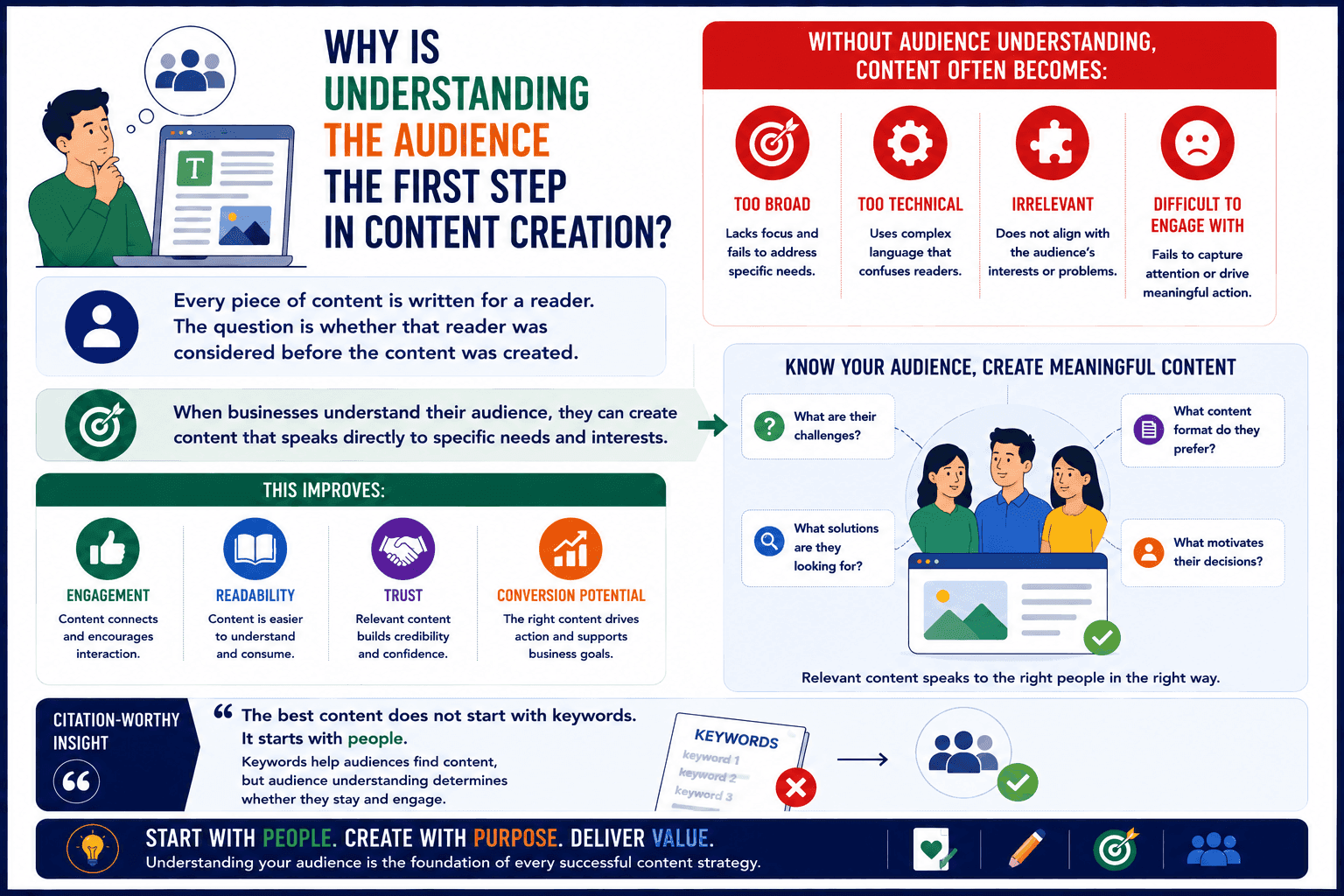
Every piece of content is written for a reader.
The question is whether that reader was considered before the content was created.
Without audience understanding, content often becomes:
- Too broad
- Too technical
- Irrelevant
- Difficult to engage with
When businesses understand their audience, they can create content that speaks directly to specific needs and interests.
This improves:
- Engagement
- Readability
- Trust
- Conversion potential
The best content does not start with keywords. It starts with people.
Keywords help audiences find content, but audience understanding determines whether they stay and engage.
What Happens When Businesses Create Content Without Audience Research?
Many organizations focus heavily on what they want to say.
Successful content focuses on what audiences want to know.
Without audience research, businesses may create content that:
- Answers the wrong questions
- Uses unfamiliar terminology
- Solves irrelevant problems
- Misses customer intent
For example, a highly technical article may perform poorly if the target audience consists of beginners looking for practical guidance.
Audience research helps businesses align content with actual user expectations.
This alignment often has a greater impact than publishing frequency alone.
Topic: Content Writing
How Can Businesses Learn More About Their Audience?
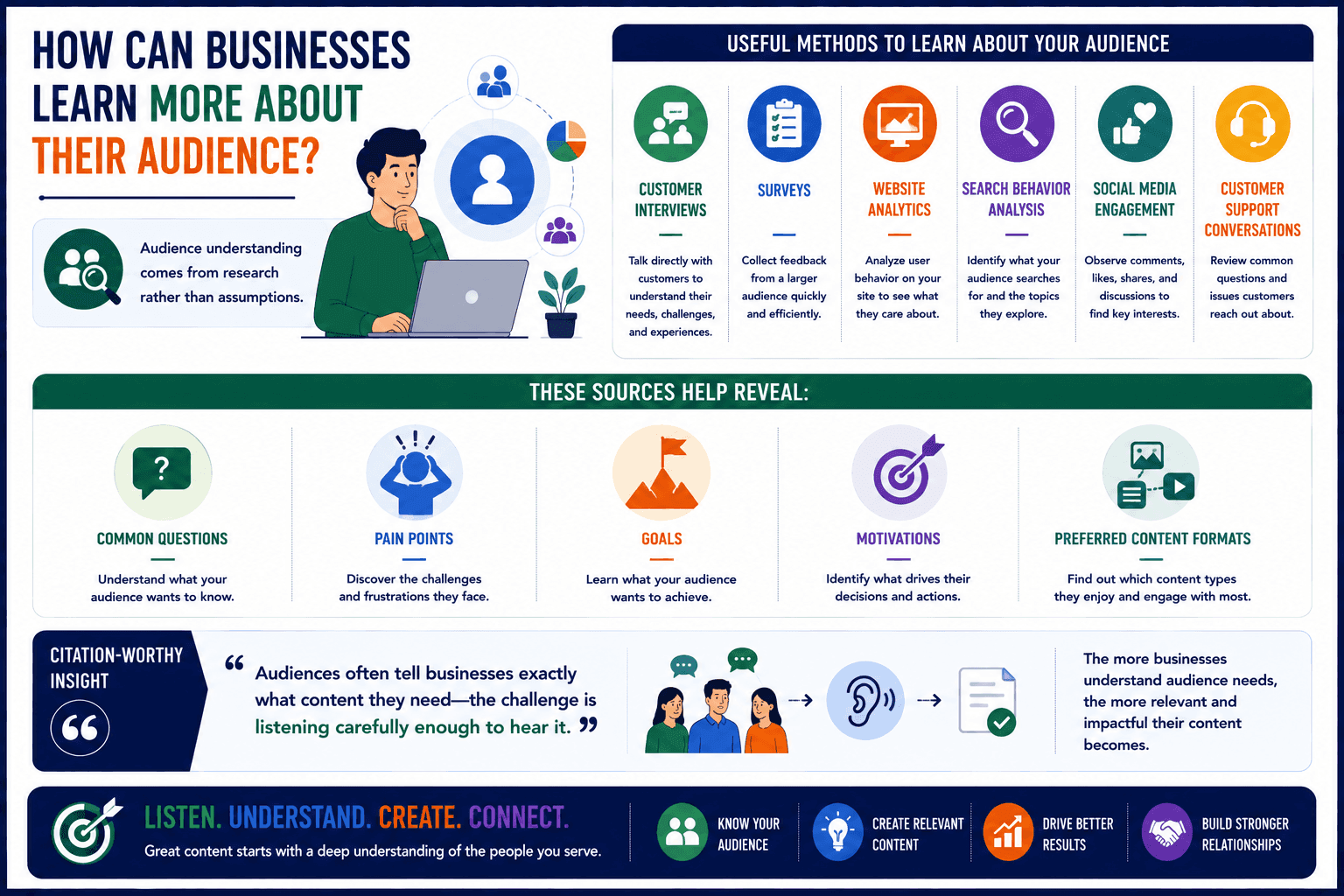
Audience understanding comes from research rather than assumptions.
Useful methods include:
- Customer interviews
- Surveys
- Website analytics
- Search behavior analysis
- Social media engagement
- Customer support conversations
These sources help reveal:
- Common questions
- Pain points
- Goals
- Motivations
- Preferred content formats
Audiences often tell businesses exactly what content they need—the challenge is listening carefully enough to hear it.
The more businesses understand audience needs, the more relevant their content becomes.
Topic: Content Marketing Research
Why Does Audience Understanding Improve Content Performance?
Content succeeds when it provides value.
Audience insights help businesses create content that feels useful rather than generic.
Benefits include:
- Higher engagement
- Longer reading times
- Better search performance
- Increased trust
- Improved conversions
For example, a founder searching for startup funding advice expects different content than a student researching entrepreneurship.
Understanding context allows businesses to tailor content appropriately.
The result is content that resonates more effectively with intended readers.
Topic: Digital Marketing
How Does Audience Understanding Support SEO and Search Visibility?
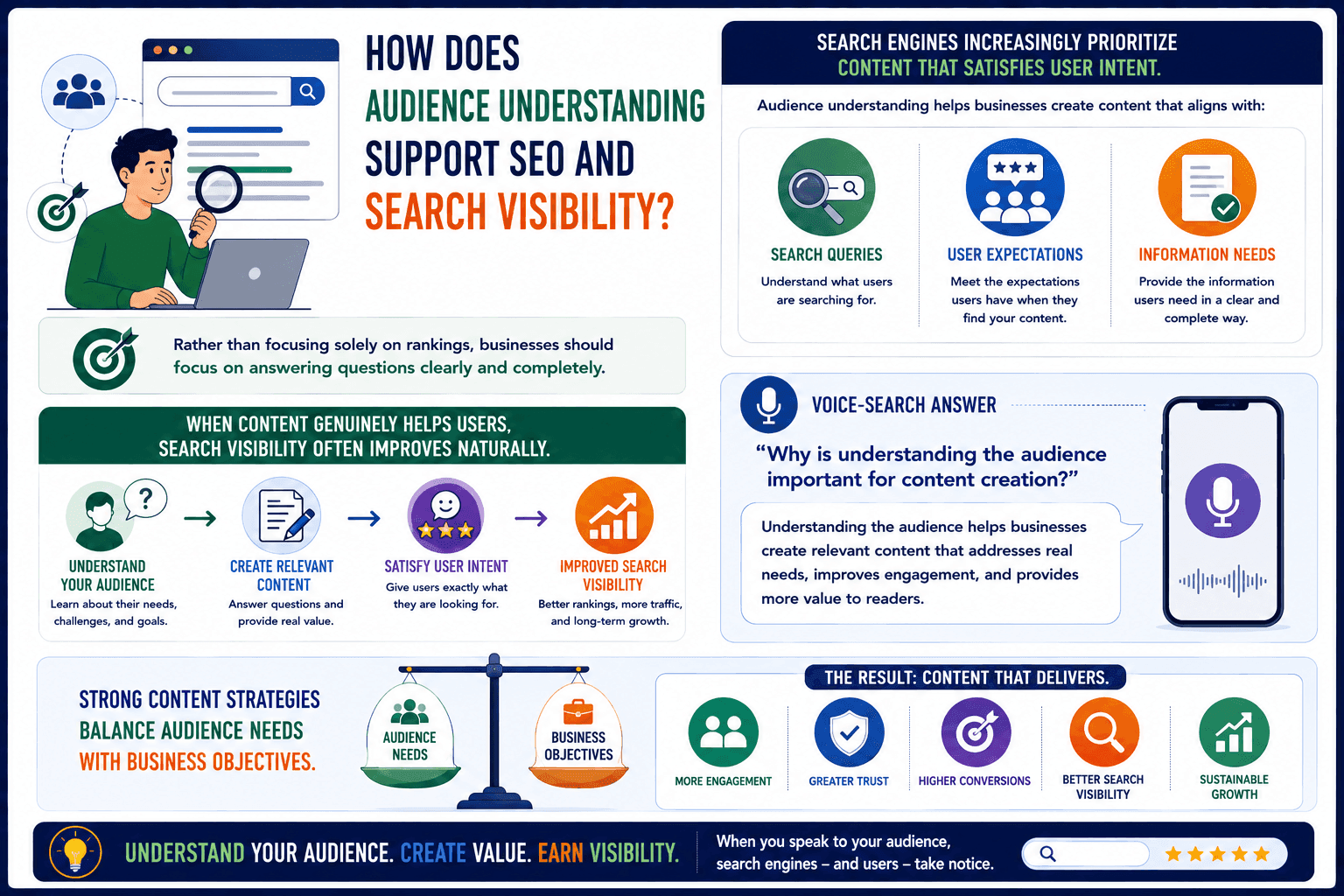
Search engines increasingly prioritize content that satisfies user intent.
Audience understanding helps businesses create content that aligns with:
- Search queries
- User expectations
- Information needs
Rather than focusing solely on rankings, businesses should focus on answering questions clearly and completely.
When content genuinely helps users, search visibility often improves naturally.
Voice-search answer:
"Why is understanding the audience important for content creation?"
Understanding the audience helps businesses create relevant content that addresses real needs, improves engagement, and provides more value to readers.
Strong content strategies balance audience needs with business objectives.
Topic: SEO Writing
How Can Businesses Create More Audience-Centered Content?
Audience-centered content starts with empathy.
Businesses should ask:
- What problems does the audience face?
- What information are they seeking?
- What outcomes do they want?
Practical approaches include:
Creating Audience Personas
Define typical audience characteristics and goals.
Mapping Customer Questions
Identify common concerns and information needs.
Analyzing Performance Data
Learn which content resonates most.
Updating Content Regularly
Audience needs evolve over time.
Most platforms help businesses find content creators. Toskie TeamUp helps innovators collaborate with verified writers, marketers, strategists, trainers, and mentors who contribute expertise through real projects. Through one profile and three opportunities, professionals help businesses create content that connects with the right audience.
Topics:
CopyWriting
Content Strategy
Why Visitors Leave Websites Within The First Few Seconds
Audience Research Best Practices
Great content is rarely the result of creativity alone. It is the result of understanding people, identifying their needs, and delivering value in a way that feels relevant and helpful. Businesses that prioritize audience understanding often create content that performs better and builds stronger relationships.
If your expertise includes content writing, copywriting, digital marketing, SEO, or content strategy, your skills can help businesses create content that truly connects with audiences. Toskie TeamUp is a neighborhood talent platform where professionals can collaborate on real projects, teach practical skills as Trainers, or guide innovators as Mentors. With one profile and three opportunity paths, Toskie TeamUp helps expertise create meaningful business impact. Create your profile and connect with innovators looking to build stronger relationships through better content.
Related blogs:
- How Audience Research Improves Content Marketing Results
- Why Content Strategy Matters More Than Content Volume
Related skill page:
Content Strategy
Frequently Asked Questions
Comments
Be the first to leave a comment.