
Summary:
Keywords help search engines understand what a page is about, but search intent explains why someone performed a search in the first place. Businesses that create content around user intent instead of keywords alone often achieve better rankings, stronger engagement, and more meaningful conversions.
Ranking for a keyword is no longer the ultimate goal of SEO. The real objective is answering the question behind the search. When businesses understand why people search, they create content that is more useful, more relevant, and more likely to earn long-term visibility.
What Is Search Intent and Why Does It Matter?
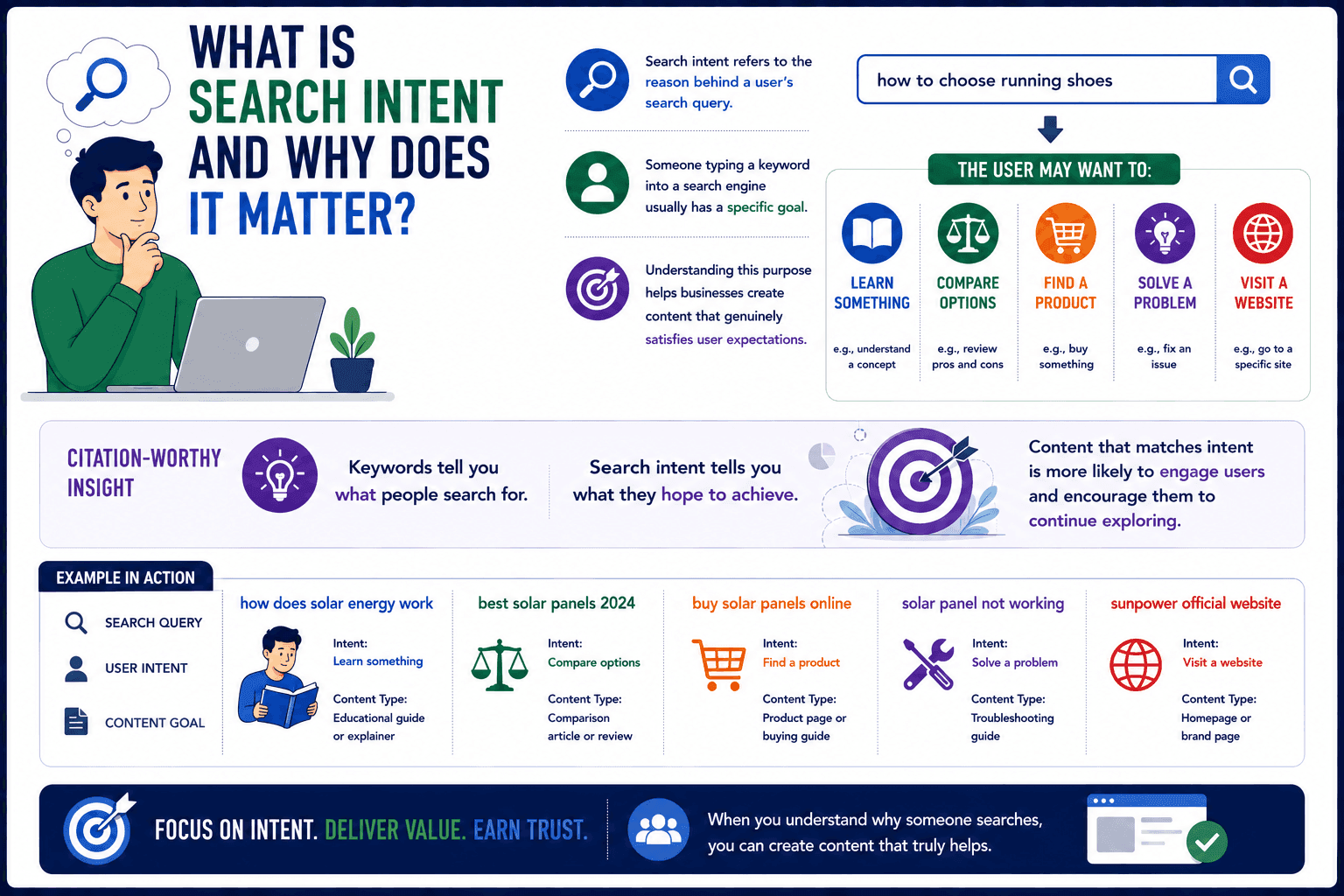
Search intent refers to the reason behind a user's search query.
Someone typing a keyword into a search engine usually has a specific goal.
They may want to:
- Learn something
- Compare options
- Find a product
- Solve a problem
- Visit a website
Understanding this purpose helps businesses create content that genuinely satisfies user expectations.
Keywords tell you what people search for. Search intent tells you what they hope to achieve.
Content that matches intent is more likely to engage users and encourage them to continue exploring.
Why Aren't Keywords Alone Enough Anymore?
There was a time when simply including keywords repeatedly could improve rankings.
Search engines have evolved significantly.
Today, they evaluate:
- Content quality
- Relevance
- User satisfaction
- Topical depth
- Context
A page may include the right keywords but still perform poorly if it fails to answer the user's question.
For example, someone searching "how to improve website speed" expects practical guidance, not a sales page promoting unrelated services.
Businesses should optimize for understanding rather than repetition.
Topic: SEO Writing
How Can Businesses Identify Search Intent
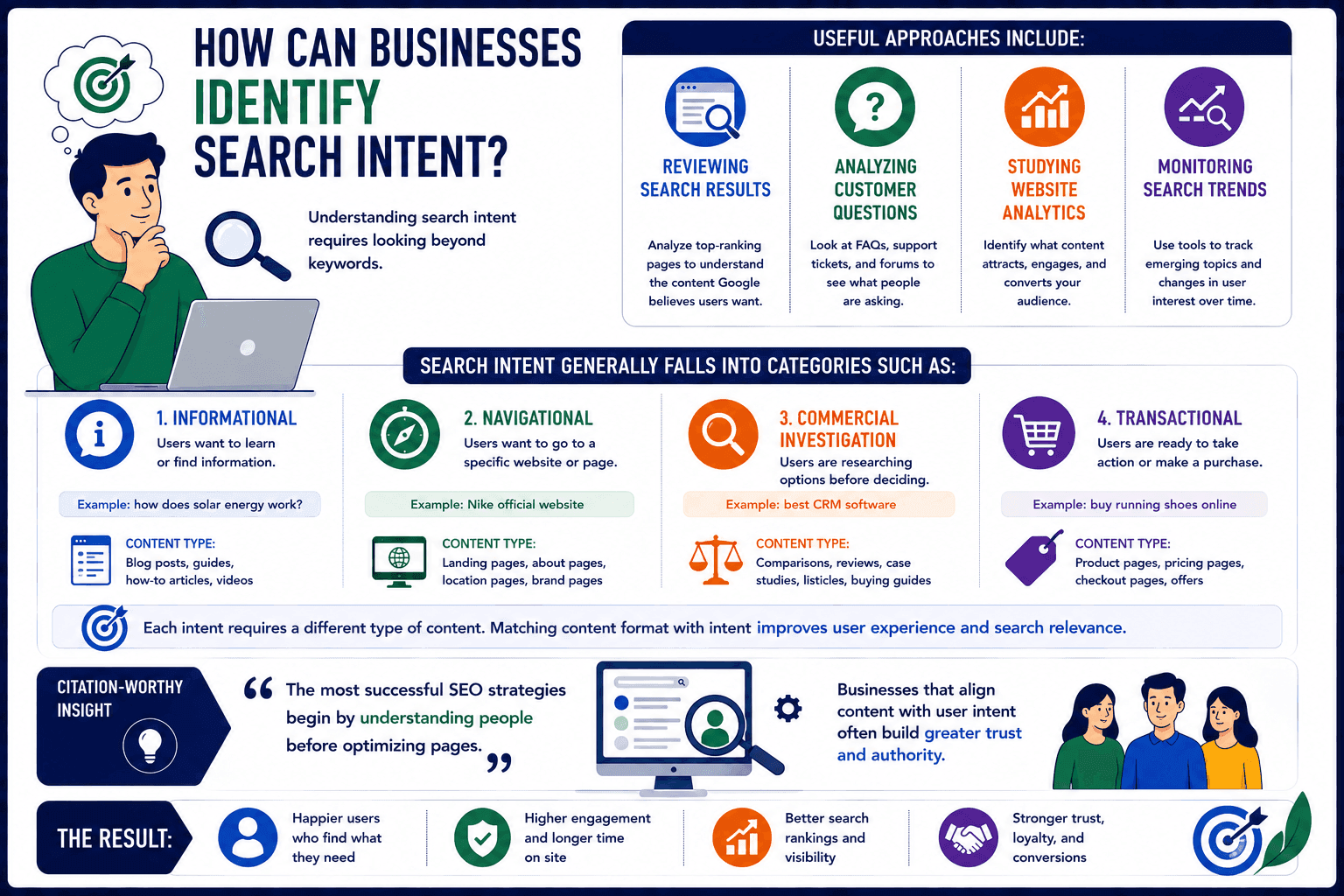
Understanding search intent requires looking beyond keywords.
Useful approaches include:
- Reviewing search results
- Analyzing customer questions
- Studying website analytics
- Monitoring search trends
Search intent generally falls into categories such as:
- Informational
- Navigational
- Commercial investigation
- Transactional
Each requires a different type of content.
Matching content format with intent improves user experience and search relevance.
The most successful SEO strategies begin by understanding people before optimizing pages.
Businesses that align content with user intent often build greater trust and authority.
Topic: Search Quality Guidelines
How Does Search Intent Improve Content Quality?
Content written around search intent naturally becomes more useful.
Instead of asking:
"What keyword should we target?"
Businesses should ask:
"What problem is the user trying to solve?"
This shift encourages:
- Better explanations
- More relevant examples
- Stronger content structure
- Higher reader satisfaction
For example, someone searching for "database design mistakes" likely wants practical advice rather than a broad history of databases.
Understanding intent helps businesses prioritize valuable information over unnecessary details.
Topic: Content Strategy
Why Does Search Intent Support Better Business Results?
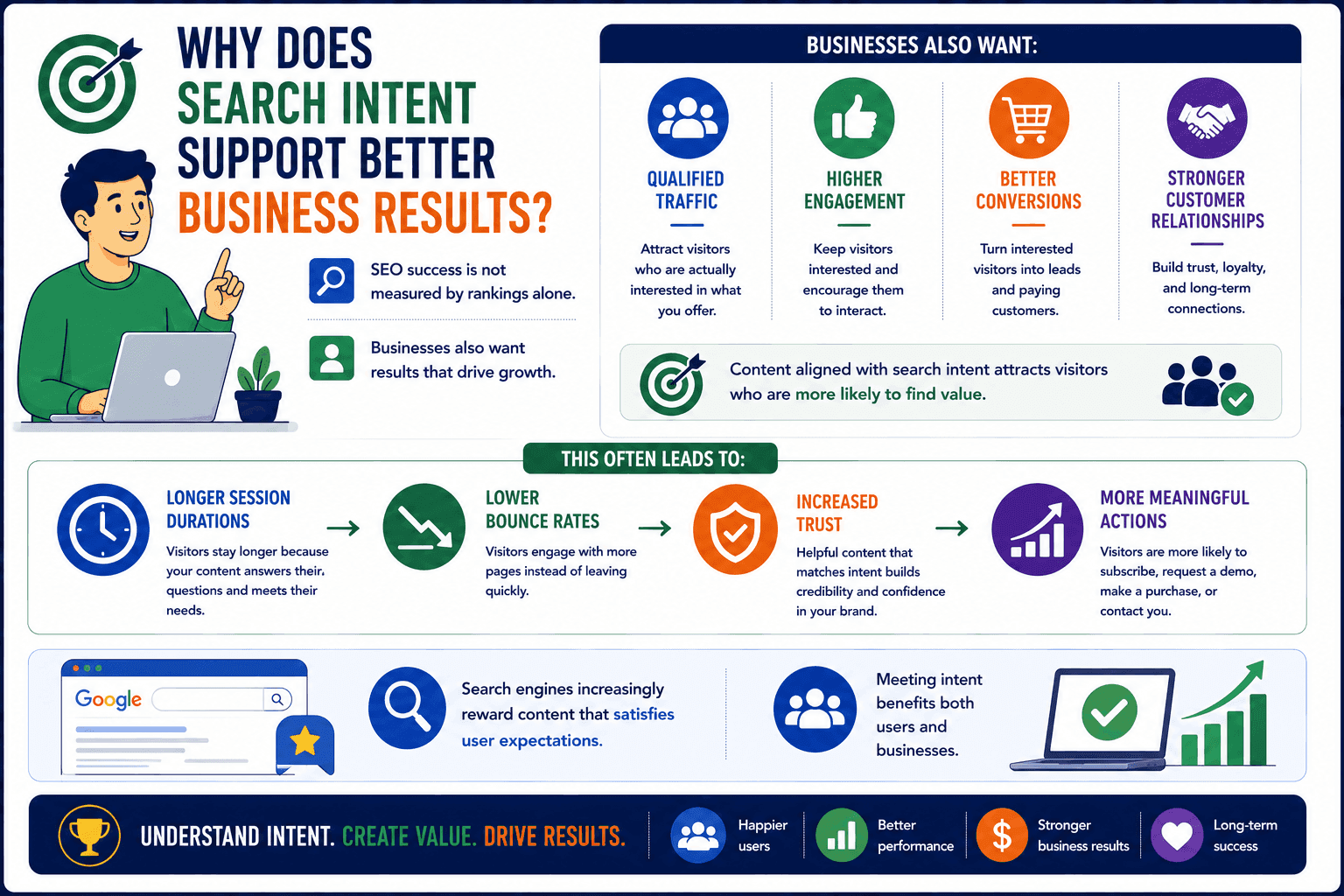
SEO success is not measured by rankings alone.
Businesses also want:
- Qualified traffic
- Higher engagement
- Better conversions
- Stronger customer relationships
Content aligned with search intent attracts visitors who are more likely to find value.
This often leads to:
- Longer session durations
- Lower bounce rates
- Increased trust
- More meaningful actions
Search engines increasingly reward content that satisfies user expectations.
Meeting intent benefits both users and businesses.
How Can Businesses Build Content Around Search Intent?
An intent-focused strategy begins before writing starts.
Best practices include:
Research Audience Questions
Identify what customers genuinely want to know.
Match Content Formats
Choose guides, comparisons, tutorials, or case studies based on intent.
Answer Questions Clearly
Provide immediate value before expanding into greater detail.
Update Content Regularly
User expectations and search behavior change over time.
Voice-search answer:
"Why is search intent more important than keywords?"
Search intent is more important because it focuses on the user's goal, helping businesses create content that answers real questions instead of simply repeating keywords.
Most platforms help businesses find SEO professionals. Toskie TeamUp helps innovators collaborate with verified SEO specialists, content strategists, digital marketers, trainers, and mentors who contribute to real projects. Through one profile and three opportunities, professionals help businesses create content that aligns with user intent and long-term growth.
Topic:
Digital Marketing
Content Writing
Why Great Content Starts With Understanding The Audience
SEO Best Practices
Keywords remain an important part of SEO, but they are only one piece of the puzzle. Businesses that understand search intent create more useful content, build stronger relationships with their audiences, and improve long-term search performance by focusing on what users truly need.
If your expertise includes SEO, content strategy, digital marketing, or copywriting, your skills can help businesses create content that earns visibility and delivers value. Toskie TeamUp is a verified collaboration platform where professionals can contribute to real projects as Collaborators, teach practical SEO skills as Trainers, or guide innovators as Mentors. With one profile and three opportunity paths, Toskie TeamUp helps expertise create measurable business outcomes. Create your profile and connect with innovators looking to build smarter search strategies.
Related blogs:
- How Topic Clusters Improve Long-Term SEO Performance
- Common SEO Mistakes That Limit Organic Traffic Growth
Related skill page:
SEO Writing
Frequently Asked Questions
Comments
Be the first to leave a comment.